





Earth Hero: Action climatique isn’t just another habit tracker. It is a dedicated tool for lowering your personal carbon footprint, available on Android and iOS. The app pairs scientific data with daily challenges to help you understand exactly where your environmental impact comes from. Whether you are a climate novice or a seasoned eco-activist, the platform aims to make the transition to a greener lifestyle accessible, personalized, and measurable.
How Earth Hero measures your environmental impact
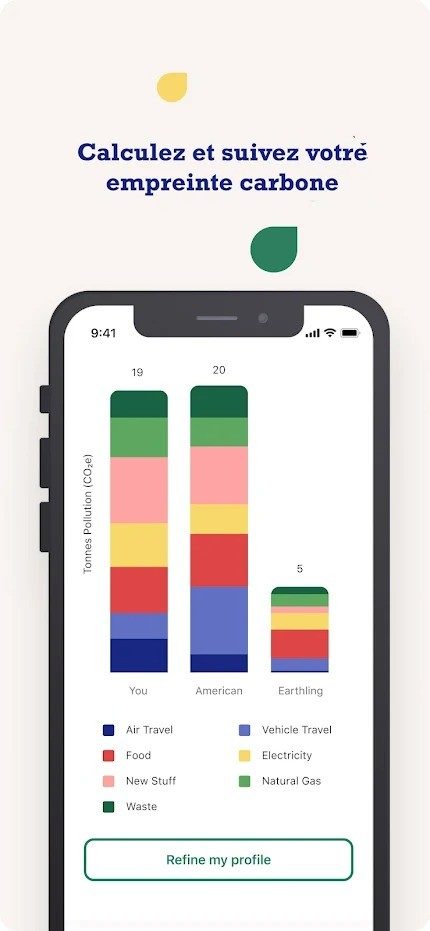
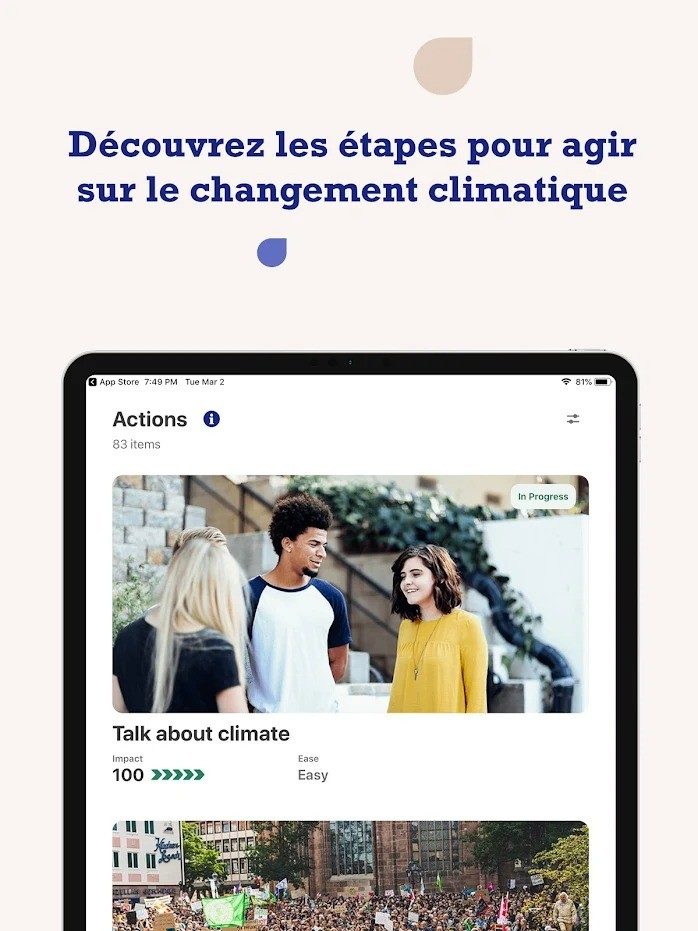
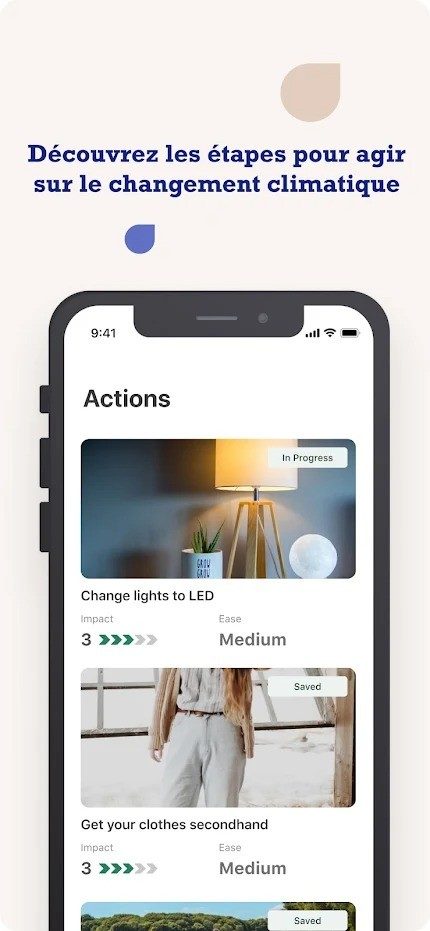
The core function of the app is analysis. It breaks down your lifestyle into specific categories: consumption habits, mobility choices, diet, waste management, and energy usage. This isn’t a generic quiz. The system provides contextualized recommendations based on your actual data. It tells you which change will have the biggest impact in your specific situation. Maybe it is time to switch to soft transport. Maybe you need to optimize home energy use. Or perhaps your food choices are the main culprit.
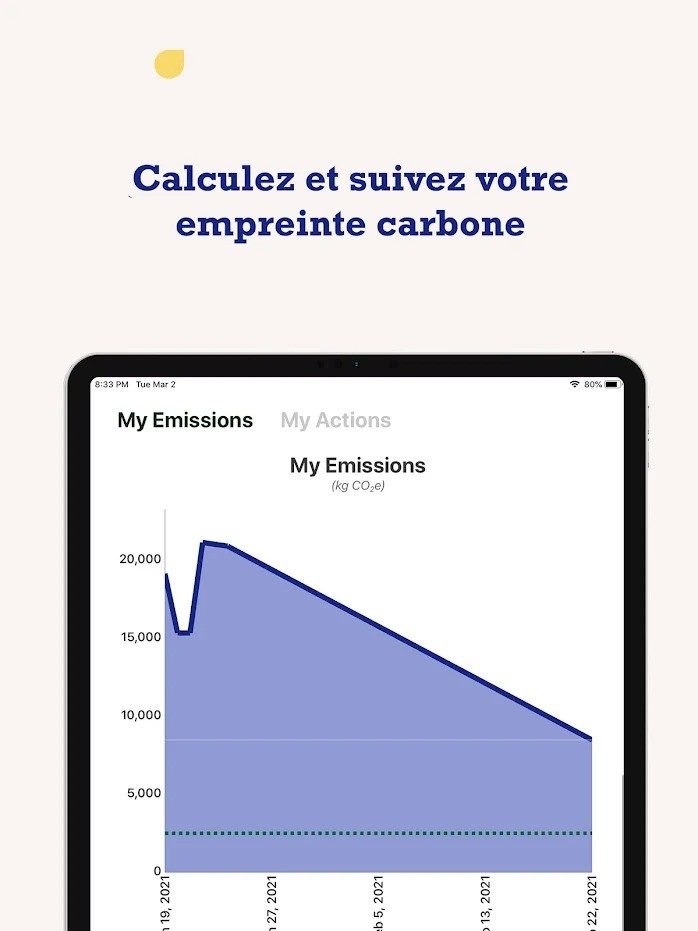
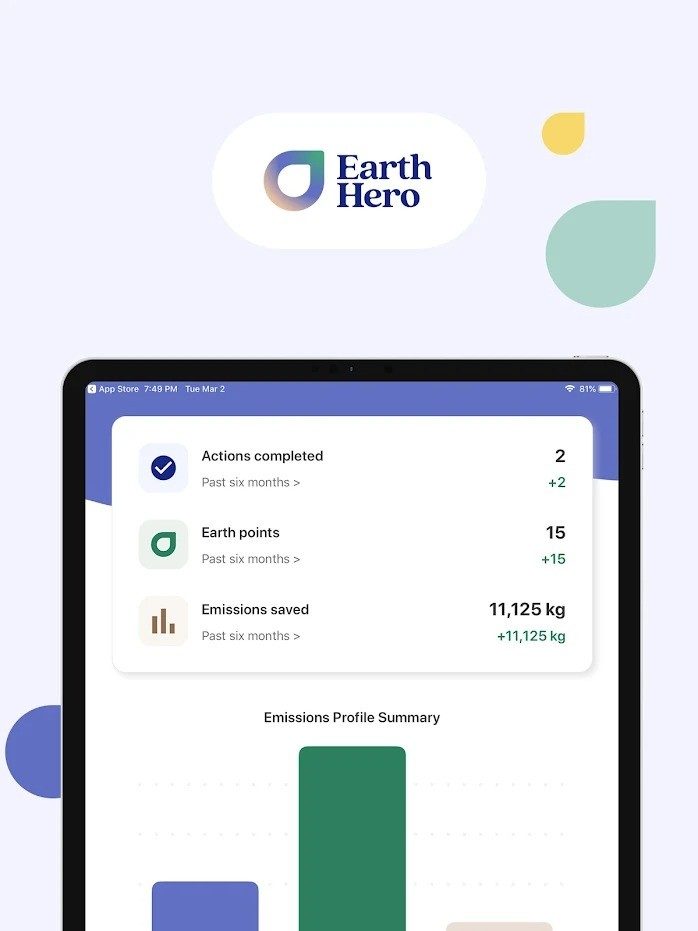
The interface is designed to be intuitive. You don’t need technical skills to navigate the statistics or set up your plan. Each action you complete triggers a visual feedback loop. Progress bars and indicators make your efforts visible. This turns abstract concepts like “saving the planet” into concrete, trackable metrics. You can see the difference between a good day and a bad one at a glance.
Why the educational approach matters
Earth Hero stands out because it explains the “why” behind the “what”. It uses interactive learning paths that adapt to your pace. The content is updated regularly to reflect the latest scientific findings. You aren’t just following rules; you are learning about the complexities of climate change through articles, infographics, and practical tips.
The app curates reliable resources from international institutions and research bodies. This ensures that the advice you receive is grounded in fact, not just ideology. It bridges the gap between awareness and action. You learn to recognize your own impact and then find clear pathways to reduce it. This educational layer is crucial for long-term motivation. It turns a one-time download into a continuous learning experience.
Community features and device compatibility
You are not alone in this effort. Earth Hero includes a collaborative dimension. You can join communities of users who share your values. Tracking tools allow you to compare your progress with others. This social comparison creates a positive competitive environment. It helps sustain motivation over time. Local action groups are also highlighted, connecting your digital efforts to real-world initiatives.
For device users, the options are specific. Earth Hero: Action climatique is exclusively available on mobile devices. It supports Android smartphones and tablets, as well as iOS devices including iPhone and iPad. There is no native version for Windows, macOS, or Linux yet. Desktop users must rely on their mobile devices for access. The app synchronizes data across your profile, so your progress remains intact whether you are at home or on the go.
How to download and start using the app
Accessing the tool is straightforward and cost-free. You can download Earth Hero from the Google Play Store for Android or the App Store for iOS. There are no hidden fees or entry barriers. This free model makes it a viable option for students, teachers, and anyone looking to take concrete steps toward sustainability. The installation process is simple, requiring no special technical knowledge.
The goal is not just to inform, but to empower immediate action through personalized, data-driven guidance.
The app remains accessible both technically and financially. It strips away the complexity often associated with climate data. By making the tools practical and the data clear, Earth Hero lowers the threshold for engagement. It invites you to start small, track your progress, and grow your impact over time.
How Earth Hero: Action climatique compares to other climate tracking apps
Most carbon footprint calculators stop at the math. They give you a number, maybe a graph, and then leave you to figure out what to do with it. Earth Hero: Action climatique takes a different approach. It pairs that diagnostic with a structured learning path. You aren’t just measuring your impact; you are learning how to reduce it through specific, actionable steps.
Apps like My Little Plastic Footprint or AWorld tend to focus on narrow sectors. One might track your plastic consumption, another your food choices. They use themed challenges to keep you engaged. Earth Hero offers a broader, more progressive framework. You build your own journey. It connects social dynamics with personal behavior change, something most competitors miss.
The app relies on scientific validation and transparent methodology, using public data to ensure the greenhouse gas calculations are reliable.
This transparency matters. When an app tells you your emissions are high, you need to trust the source. Earth Hero cites its data methods clearly. It also builds a community layer into the experience. You can join action groups, share tips, and discover local initiatives. That social pressure and support system is a major differentiator. It turns an individual habit change into a collective effort.
Why Earth Hero is completely free and how that affects user adoption
There is no paywall. No premium tier. No “feature locked” notifications. The entire application is accessible to anyone with a smartphone.
This accessibility is significant. For students, young professionals, or anyone with limited financial means, a subscription-based climate tool is often out of reach. By keeping Earth Hero free, the developers remove that barrier. It increases the potential user base and, consequently, the collective impact of the behavioral changes.
The app also updates regularly. As climate science evolves and international regulations shift, the recommendations inside Earth Hero adjust accordingly. This ensures the advice remains current. You are not relying on static data from five years ago. The software adapts to the changing landscape of climate action.
The network effect is strong here. Because it is free and community-driven, users share results and discoveries. This creates a feedback loop. One person’s success encourages another. The app acts as a central hub for environmental awareness, bridging the gap between individual responsibility and group action.
How to install, update, and master Earth Hero: Action climatique
Getting started is straightforward. You don’t need a developer account or a special permission.
- Go to the Google Play Store or the Apple App Store.
- Search for “Earth Hero: Action climatique”.
- Download and install.
- Sign up using your email or an existing social media account.
Once logged in, the app asks a few introductory questions. These help personalize your profile. The carbon calculator adjusts its advice based on your daily reality. It is not a one-size-fits-all model. It learns your habits.
You should enable automatic updates. The app receives new modules, challenges, and scientific insights regularly. If you prefer manual control, you can check the app store periodically to install the latest version.
Need an older version for compatibility? Check the developer’s official site or the project’s GitHub page. They maintain archives of previous releases.
For those new to the platform, interactive guides walk you through the basics. If you want to dive deeper, the FAQ and specialized tutorials are available. Teachers and educators have access to specific resources too, including webinars and video tutorials. These materials help integrate Earth Hero into formal or informal educational settings.
The license model is open. There are no hidden costs. The philosophy is about democratizing ecological tools. It focuses on transparency, responsibility, and collective engagement. Earth Hero is not just a utility; it is an educational software solution designed to stay relevant as climate concerns grow.
Earth Hero : Action climatique technical specs and offline capabilities
You might wonder if this app demands a flagship device or constant 5G speeds. It does not. Earth Hero : Action climatique is built to run lightly, meaning it avoids the heavy resource drain typical of bloated educational tools. The design philosophy here is reliability over spectacle. Your phone just needs to handle basic tasks, which most modern Androids and iPhones do without breaking a sweat.
The app works partially without an internet connection. This is a significant feature for climate tracking, where you might be offline but still want to log actions or review your carbon footprint. When you reconnect, the app syncs your progress discreetly in the background. You do not need to keep Wi-Fi on 24/7 to maintain your data integrity.
Which permissions does the app request and why?
Transparency is key. The permissions asked for are strictly tied to the service.
- Network Access : Required for account login, data synchronization, and fetching the latest methodological content.
- Notifications : Used to remind you about challenges or updates.
- Location (Optional) : If you enable this, the app suggests local sustainability initiatives near you. It is not mandatory.
You will not see requests for camera access, microphone use, or contact lists. The data collected remains focused on profile information and usage metrics necessary to run the service. Always check the privacy policy to see exactly what is stored.
How does the open-source model affect the user experience?
Earth Hero : Action climatique is free and open source. The code is available on a public GitHub repository. This matters for two reasons. First, you can verify what the app actually does. Second, it ensures a low barrier to entry. There is no subscription fee. The economic model relies on potential donations through the official website, keeping the core product free for students, teachers, and individuals.
The interface is currently in English, though community translations may appear. The app supports standard accessibility settings on both Android and iOS, making it usable for a wide range of users. Distribution happens exclusively through the Google Play Store and Apple App Store, which guarantees file integrity.
Is Earth Hero suitable for offline educational use?
Yes. Teachers and associations can use this for group projects or individual tracking without relying on a stable classroom connection. The multi-device synchronization feature means if you log an action on your tablet, it will appear on your phone once both devices connect to the internet.
The app targets a specific niche: sustainable development education. It does not try to be a full lifestyle tracker or a social network. It stays focused on understanding your carbon footprint and adopting concrete actions. The lightweight nature ensures it does not clutter your device, fitting easily into daily personal or pedagogical routines.
If you are deciding where to download Earth Hero : Action climatique, stick to the official stores. This avoids security risks associated with third-party APKs or sideloading. The setup is straightforward, requiring no complex hardware configuration. Just install, log in, and start tracking.
The Cloud Is Now the Default
For a long time, the distinction between local storage and cloud storage felt like a binary choice. You either kept files on your hard drive or you uploaded them to a server. That line has blurred. Modern operating systems and productivity suites treat remote storage as an extension of your local file system. When you open a document in OneDrive or iCloud, the system checks the network status. If you are connected, it streams the latest version. If you are not, it falls back to the last cached copy.
This shift changes how software behaves. Applications no longer just read data; they negotiate for it. A spreadsheet might load slowly not because the file is huge, but because the client is waiting for a checksum verification from the server to ensure no one else edited the cell you are looking at.
Why Local Caches Still Matter
You might wonder why developers bother with local caching if the internet is fast enough. Latency. A ping to a data center can take 20 milliseconds. Multiply that by the number of requests your app makes, and the delay becomes noticeable.
Local caches act as a buffer. They store frequently accessed metadata, thumbnails, and small text files on your device. This allows the interface to render instantly, even before the heavy assets load. It also provides a safety net. If your connection drops in a subway tunnel, your notes app still opens. It shows you the last saved state. You cannot edit, but you can read.
“Offline-first” architecture is not about disconnecting from the internet. It is about making the disconnection invisible to the user.
This matters for mobile users especially. Phones switch between Wi-Fi and cellular networks constantly. A cloud-only app that freezes every time the signal dips feels broken. A well-designed app feels fluid because it has already downloaded the content you likely need.
How Sync Engines Handle Conflicts
What happens when two people edit the same file at the same time? This is the hardest part of distributed systems.
Older systems used a lock. You checked out a file. No one else could touch it until you checked it back in. That worked for small teams but failed in real-time collaboration.
Modern sync engines use Operational Transformation (OT) or Conflict-free Replicated Data Types (CRDTs). These algorithms look at the intent of each change, not just the result. If Alice changes a word to “red” and Bob changes the same word to “blue” at the same time, the system does not just pick one. It attempts to merge the operations based on timestamps and user priority.
Sometimes, it fails. You get a conflict notification. The software asks you to choose which version to keep. This is frustrating, but it is rare in practice. Most users edit different parts of a document. The scary scenario is two people deleting the same paragraph.
Security Implications of Hybrid Storage
When your data lives partly on your device and partly in the cloud, your attack surface grows.
Local files are vulnerable to malware on your computer. Cloud files are vulnerable to account takeover. You now have to secure both ends.
This is why end-to-end encryption is gaining traction. With E2EE, the data is encrypted on your device before it leaves. The cloud provider stores ciphertext. They cannot read your files even if they want to. This shifts the security burden. You must protect your device keys.