




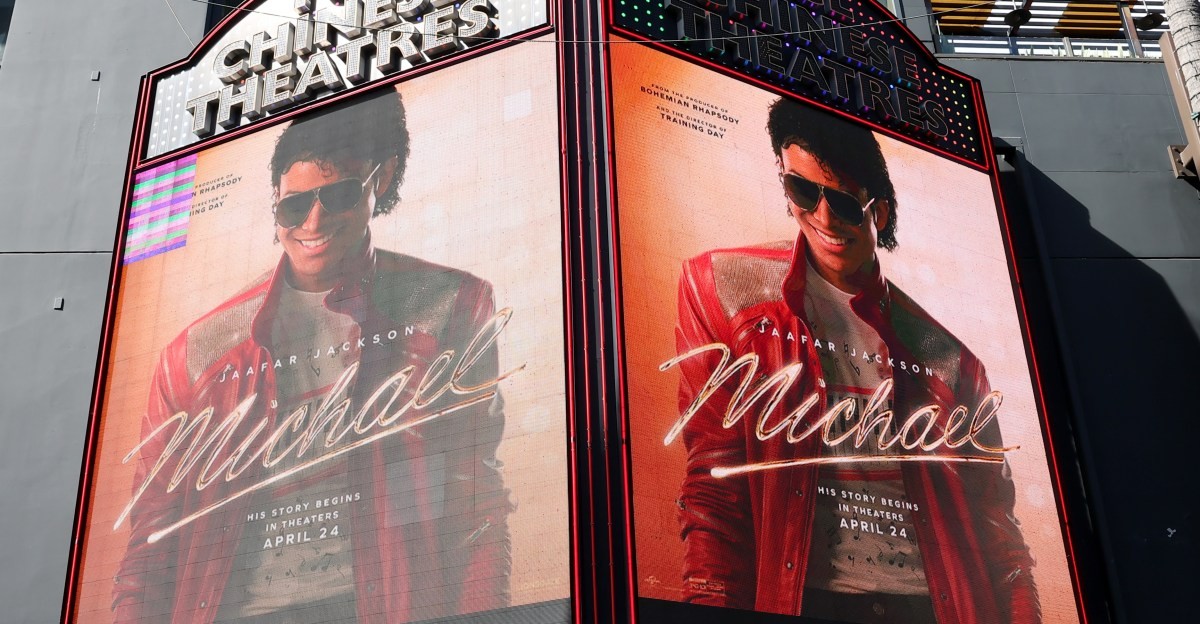
The release of the new Michael Jackson biopic, Michael, has triggered more than just a discussion of pop culture; it has reignited a fierce and uncomfortable debate over how society reconciles artistic genius with allegations of profound misconduct. Despite the heavy shadow cast by the 2019 documentary Leaving Neverland, which presented credible accusations of child sexual abuse against the “King of Pop,” the film has achieved a record-breaking opening weekend.
This commercial success suggests a significant shift in public appetite: audiences appear increasingly willing to separate the man from the music, choosing to celebrate Jackson’s unparalleled musical legacy while setting aside the controversies that once led advertisers and networks to distance themselves from him.
The Three Pillars of Defense
The reaction to the film and Jackson’s legacy generally falls into three distinct categories:
- The Aesthetic Detachment: Many viewers have adopted a “separation of art and artist” approach. For these fans, the cinematic recreation of Jackson’s legendary concerts offers a pure musical experience that outweighs the ethical discomfort of his personal history.
- The Claim of Innocence: Driven largely by social media platforms like TikTok, a significant movement of defenders maintains that Jackson was innocent, often arguing that the world “owes him an apology.”
- The Racial Justice Argument: A more complex defense, championed by figures such as the film’s director Antoine Fuqua, views the allegations through the lens of systemic racism. This perspective posits that Jackson was a victim of a legal system designed to target and dismantle successful Black men. Fuqua has noted that early cuts of the film depicted the police treating Jackson “like an animal,” a depiction removed for legal reasons, highlighting the tension between the investigation and the treatment of a high-profile Black figure.
The Conflict of Two Marginalized Realities
The debate surrounding Jackson is uniquely painful because it forces a confrontation between two groups that the American justice system often fails: Black men and victims of child sexual abuse.
To understand why this debate is so polarized, one must look at the historical and statistical context:
The Reality of Systemic Injustice
The suspicion toward the prosecution of Jackson is rooted in a documented history of racial bias. According to the ACLU, Black Americans are incarcerated in state prisons at nearly five times the rate of white Americans. History is replete with instances where Black men were falsely accused of heinous crimes—such as the Scottsboro Boys or the Central Park Five—to satisfy a biased public. For many, the fear that the state is “tearing down another good Black man” is a legitimate historical concern.
The Vulnerability of Child Victims
Conversely, the legal system is notoriously difficult for child abuse victims to navigate. Statistics show that fewer than one in five cases lead to prosecution, and even fewer result in convictions. Furthermore, the testimony of children is frequently met with systemic skepticism, often fueled by myths that children are easily manipulated or lack physical evidence of trauma.
This creates a “double bind” for victims of color. As noted by criminology experts, Black and minority children exist at the intersection of multiple structural inequalities, meaning their experiences of victimization are often overlooked or dismissed by the very systems meant to protect them.
Conclusion
The success of the Michael biopic highlights a profound societal tension: the ease of consuming greatness versus the difficulty of confronting uncomfortable truths. While the film provides a spectacle of musical brilliance, it simultaneously underscores a dark reality where the pursuit of justice for one group often appears to come at the expense of another.