



For much of the last year, the promise of an “AI health coach” has felt more like marketing fluff than a functional tool. While tech giants like Google, Apple, and Meta have integrated AI into their ecosystems, the experience has largely remained passive. Most users are forced to act as their own analysts—opening apps, digging through biometric charts, and asking specific questions just to make sense of their data.
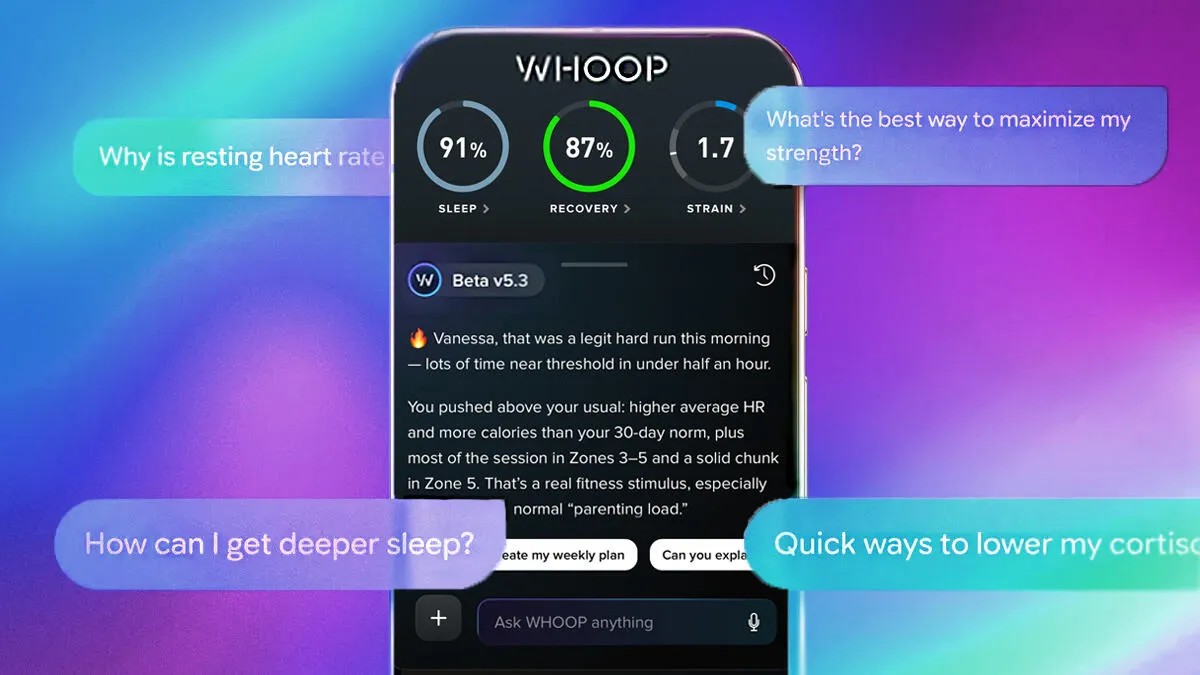
However, recent testing of the Whoop MG band suggests a shift in the landscape. Instead of waiting for user input, Whoop has developed an AI that is proactive, contextual, and, most importantly, actionable.
From Data Visualization to Actual Coaching
The fundamental difference between a standard fitness tracker and a true AI coach lies in proactivity. Most wearable AI functions as a sophisticated dashboard: it presents you with numbers and waits for you to interpret them. If you don’t know what a “low recovery score” means for your training, the data is useless.
Whoop’s approach flips this dynamic. Rather than just surfacing metrics, the AI acts as an automated guide that intervenes at critical moments:
- Predictive Insights: The coach can identify physiological shifts—such as hormonal changes—before the user even realizes they are occurring, suggesting a reduction in workout intensity to prevent burnout.
- Dynamic Workout Adjustment: When metrics indicate high strain or low recovery, the AI doesn’t just suggest “rest.” It analyzes your existing workout rotation and prescribes specific alternatives, including adjusted durations and target heart rate zones.
- Injury Prevention: By monitoring peak heart rate efforts, the AI can issue warnings against overtraining, helping users move away from an “all-or-nothing” mentality toward a more sustainable, long-term training model.
- Sleep Optimization: Instead of a static bedtime, the coach uses “sleep debt” and recent strain levels to provide dynamic bedtime reminders via lock-screen notifications.
The Privacy Paradox in Health Tech
As AI becomes more deeply integrated into wellness, it brings a significant challenge to the forefront: data privacy.
To provide this level of hyper-personalized coaching, AI models require deep access to highly sensitive biometric data. This raises several critical concerns for the consumer:
- The “Agree” Trap: Users often click through complex data disclosures without realizing the extent of what they are sharing.
- Regulatory Gaps: Much of the data collected by consumer wearables falls outside the protections of laws like HIPAA, meaning it can potentially be repurposed in ways users might not intend.
- Model Training: There is a growing tension between the desire for better AI and the risk of using personal health data to train massive, third-party models.
Whoop addresses this by stating they use anonymized, aggregated data to improve their platform and do not sell data to advertisers. However, for the privacy-conscious user, the trade-off remains a personal calculation: Is the benefit of highly accurate, proactive coaching worth the digital footprint of my biological data?
The Verdict: A New Benchmark
While no system is perfect—for instance, the Whoop band lacks an altimeter to account for the physical strain of carrying extra weight—it represents a major leap forward in wearable utility.
Most AI health tools currently feel like a chatbot “slapped onto” a spreadsheet. Whoop, by contrast, feels like a coach because it connects the dots between disparate data points and delivers them exactly when they matter most. It moves the needle from monitoring what happened to guiding what should happen next.
Conclusion: Whoop has successfully bridged the gap between passive data collection and active health guidance, setting a new standard for how AI can meaningfully integrate into human performance.