


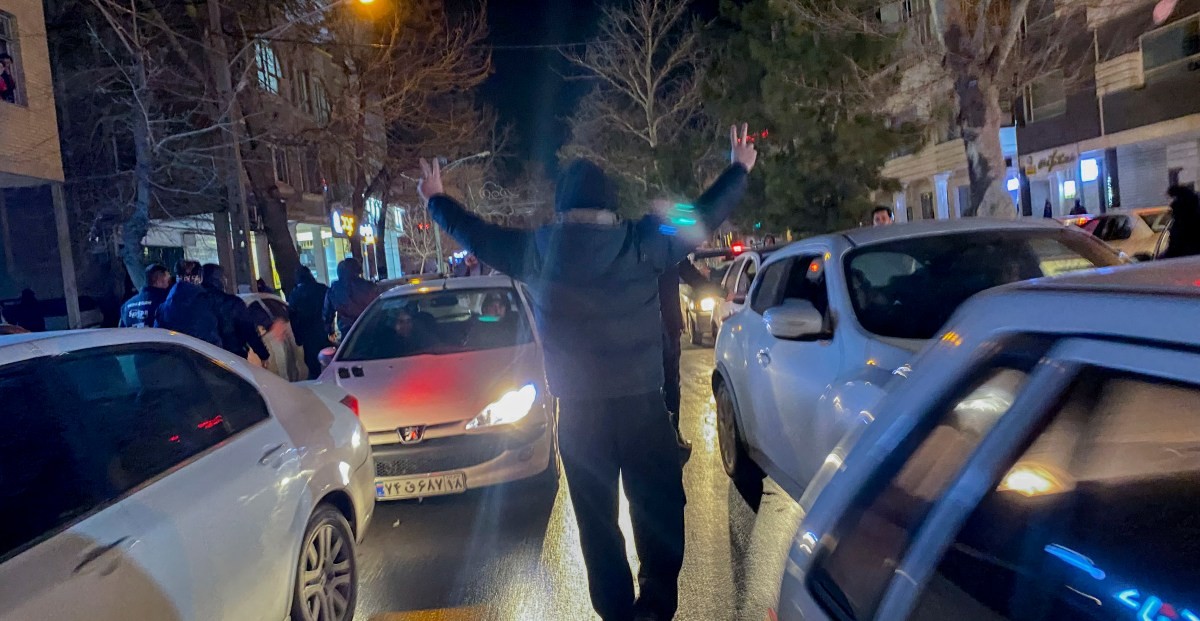
Recent unrest in Iran, marked by widespread protests and internet shutdowns, is unfolding against a backdrop of economic crisis, escalating regional tensions, and a deeply fractured political landscape. While previous protest waves have been suppressed, experts suggest this time may be different, with the regime facing unprecedented pressure from multiple fronts.
A Perfect Storm of Discontent
Protests erupted in late December, initially fueled by economic anger over the collapsing Iranian rial and soaring inflation. Merchants in Tehran closed their shops, and the unrest spread rapidly across the country. The situation escalated after exiled crown prince Reza Pahlavi called for demonstrations, though discontent had been brewing long before his intervention.
The Iranian government’s response has been typical: internet blackouts and violent crackdowns. Human rights groups report over 40 deaths and thousands detained. However, unlike past episodes of unrest, the current situation is complicated by external factors, notably the threat of direct intervention by the United States. President Trump’s warning that the US is “locked and loaded” if protesters are harmed adds an unpredictable dimension, forcing Iranian leaders to weigh domestic repression against the risk of war.
The Weight of Conflict
The protests are unfolding amid a larger geopolitical context: Iran’s recent military clashes with Israel and its faltering nuclear program. According to Vali Nasr, a leading expert on Iran, the regime’s primary concern isn’t internal stability, but the prospect of an imminent attack by the US or Israel. The war-like mentality has complicated decision-making, as suppressing protests risks triggering a wider conflict, while inaction could embolden demonstrators.
“The decision-making for Iran became much more complicated, because if you don’t clamp down on them, the protests will get bigger, and the protesters will now assume that America has their back, and they could push more,” Nasr explains.
Instrumentalizing Protest
The US and Israel are openly backing the protesters, though their motives are far from altruistic. Both nations see the unrest as a tool to weaken or break the Islamic Republic. Trump’s alignment with the protests is not about democracy promotion, but about leveraging chaos to exert pressure on Iran.
“For both Trump and Israel, the issue is not that they want to help Iranians enjoy democratic rights; the main issue is how they can weaken and break the Islamic Republic,” Nasr states.
A System Reaching its Limits
Beyond immediate triggers, deep-seated discontent with the Islamic Republic is driving the unrest. Many Iranians, regardless of age or ideology, have lost faith in the system’s ability to deliver economic prosperity or international respect. The collapse of Iranian proxies in the region, coupled with economic sanctions and internal corruption, has eroded the regime’s legitimacy.
“The pressure on the Islamic Republic is quite severe and serious,” Nasr observes. “Even before the June war, and even more so after, there were intense debates within the halls of power in the Islamic Republic around the future of the country.”
The Succession Question
The long-term stability of the regime hinges on the health of Supreme Leader Ayatollah Ali Khamenei, now 86 years old. His eventual passing will likely trigger a power struggle, potentially opening the door for reformist factions to challenge the hardliners.
“Any leader that comes in his place will not be as powerful as he is, it will take a number of years for any leader to consolidate power, and in that time period, there’s going to be a lot more intense fighting and a lot more ability by different factions to basically put on the table very different scenarios for the future of Iran.”
The situation remains volatile, and whether the current protests lead to genuine revolution or another cycle of repression is uncertain. However, the confluence of internal discontent, external pressure, and the aging leadership suggests Iran is facing a critical juncture, where the foundations of the Islamic Republic are being tested as never before.


