
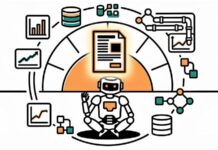


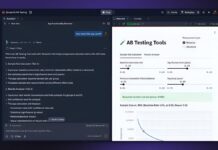

In 2026, a critical challenge for businesses deploying multiple AI agents is that these systems operate from inconsistent understandings of core business realities. This isn’t simply model failure; it’s hallucination stemming from fragmented, siloed data. Microsoft’s latest advancements in Fabric IQ aim to resolve this, providing a shared semantic layer accessible across all agents, regardless of vendor. The core issue is straightforward: if agents interpret “customer,” “order,” or “region” differently, automated decision-making breaks down.
The Problem: Fragmented Reality in AI Systems
The modern enterprise often runs a patchwork of AI tools built by different teams, using different platforms. Each agent carries its own interpretation of key business concepts, leading to inconsistencies. For example, one agent might define “high-value customer” based on revenue, while another relies on purchase frequency. This divergence creates operational chaos.
As Microsoft CTO Amir Netz aptly puts it, it’s like explaining the same information repeatedly to someone with short-term memory loss: “Every morning they wake up and they forget everything, and you have to explain it again.” Without a common reference point, agents struggle to coordinate, making unified action impossible.
Microsoft’s Solution: Fabric IQ and the MCP Advantage
Microsoft’s response centers on expanding Fabric IQ, their semantic intelligence layer. The key change is making Fabric IQ’s business ontology accessible via the Microsoft Cloud Partner Program (MCP) to any agent, not just those within the Microsoft ecosystem. This universal access is a game-changer.
Alongside this, Microsoft is unifying enterprise planning within Fabric IQ, combining historical data, real-time signals, and organizational goals into a single, queryable layer. The new Database Hub further streamlines operations by bringing Azure SQL, Cosmos DB, PostgreSQL, MySQL, and SQL Server under a unified management plane. The goal is a single source of truth for all agents.
Beyond Retrieval: Why Semantic Context Matters
Netz draws a critical distinction between Fabric IQ’s approach and Retrieval-Augmented Generation (RAG). While RAG excels at handling large documents (regulations, handbooks), it doesn’t solve the problem of real-time business state. An agent needs to know now which planes are in the air, whether employees are rested, or what the current product priorities are.
“The mistake of the past was they thought one technology can just give you everything,” Netz explains. Effective AI requires a blend of memorized knowledge, on-demand retrieval, and real-time observation.
The Implementation Challenge: Organizational, Not Just Technical
Industry analysts acknowledge the logic of Microsoft’s direction but caution that execution will be difficult. Robert Kramer of Moor Insights and Strategy notes that Microsoft’s broad product stack gives it an advantage, tying Fabric IQ into Power BI, Microsoft 365, Dynamics, and Azure services. However, this also means competing across a wider range of surfaces than rivals like Databricks or Snowflake.
The immediate question for data teams is whether MCP access truly reduces integration work. Most enterprises operate in fragmented AI environments (finance, engineering, supply chain using different tools). If Fabric IQ can act as a common data context layer, it could significantly reduce this fragmentation.
Independent analyst Sanjeev Mohan argues that the biggest hurdle isn’t technical; it’s organizational. “This is a classical capabilities overhang—capabilities are expanding faster than people’s imagination to use them.” Ensuring the context layer is reliable and trustworthy will be the true test.
The Future of Data Platforms: Context as Infrastructure
The broader trend is clear: the data platform race in 2026 isn’t about compute or storage anymore. It’s about which platform can deliver the most reliable shared context to the widest range of agents. This means the semantic layer—the ontology mapping business entities and rules—is becoming production infrastructure, requiring the same discipline as data pipelines.
Data engineering teams must adapt to this new responsibility, building, versioning, governing, and maintaining this semantic layer with rigor. The organizations that prioritize this will be best positioned to unlock the full potential of enterprise AI.