




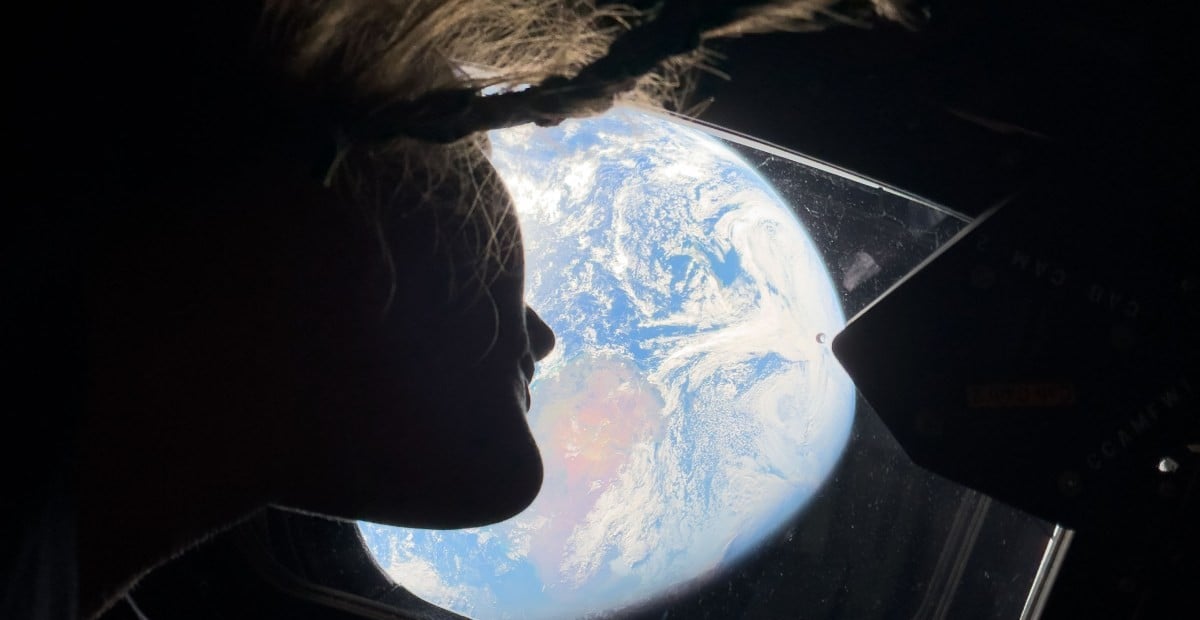
While the Artemis II mission is being celebrated for its historic milestones—marking the farthest human travel to date and featuring a diverse crew of Black, female, and Canadian astronauts—a much more practical, albeit less glamorous, breakthrough is taking center stage: the first dedicated space toilet.
In the grand narrative of space exploration, we often focus on propulsion, life support, and celestial navigation. However, as NASA pushes toward the Moon and eventually Mars, a fundamental question emerges: How do humans manage basic biological needs in microgravity? The answer to that question may determine whether long-term space habitation is even possible.
From Floating Waste to Vacuum Systems
To understand the importance of the new technology, one must look at the “unfiltered” history of space travel. During the Apollo era of the 1960s and 70s, waste management was rudimentary and, frankly, hazardous.
- The Apollo Method: Astronauts relied on adhesive bags that were taped to their bodies. These systems lacked privacy and were prone to leaking.
- The Danger of Microgravity: In a weightless environment, waste does not stay put. Mission transcripts from the Apollo era reveal a chaotic reality: astronauts had to “wrangle” floating feces and vomit that drifted through the cabin, posing significant hygiene and health risks.
- The Psychological Toll: The discomfort was so profound that some astronauts, such as Ken Mattingly, famously expressed a loss of interest in deep-space travel due to the sheer difficulty of managing basic bodily functions.
The New Standard: The Universal Waste Management System
NASA has moved far beyond adhesive bags. The Orion spacecraft now utilizes the Universal Waste Management System (UWMS), a sophisticated piece of engineering that functions more like an airplane toilet than a makeshift bag.
How it works:
- Vacuum-Driven Collection: Instead of relying on gravity, the system uses a vacuum and airflow to pull waste into a collection point, preventing particles from escaping into the cabin.
- Modular Design: The system is designed to be adaptable. It can be integrated into various spacecraft, from the Orion capsule to future lunar bases or even Mars-bound vessels.
- Disposal Protocols: Urine is collected and vented in controlled bursts, while solid waste is stored on board and eventually discarded during reentry, where it burns up in the atmosphere.
Lessons from the Field: The Reality of Space Plumbing
Even with advanced engineering, space remains a harsh environment for delicate machinery. During the early stages of Artemis II, the crew encountered significant “plumbing” issues.
The mission has already faced malfunctions regarding the urine collection fan and potential ice blockages within the tubes. These technical glitches—and the resulting odors—highlight a critical reality: in deep space, astronauts must often act as their own plumbers to maintain mission safety and comfort.
Why This Matters for the Future of Mars
It is easy to dismiss toilet technology as mundane, but for NASA, it is a cornerstone of sustainability.
If we are to establish permanent bases on the Moon or embark on a multi-year journey to Mars, we cannot simply “dispose” of everything. Future systems will need to mimic the International Space Station’s (ISS) ability to recycle liquids, turning urine back into potable water.
“If you can’t figure out the facilities, you’re never gonna figure out Mars.”
The success of the Artemis II toilet testing will dictate whether humans can move from being temporary visitors in space to long-term residents of the solar system.
Conclusion: The Artemis II mission proves that space exploration is as much about mastering basic human biology as it is about conquering the stars. Solving the “toilet problem” is a prerequisite for the survival and sustainability of all future deep-space colonization.