

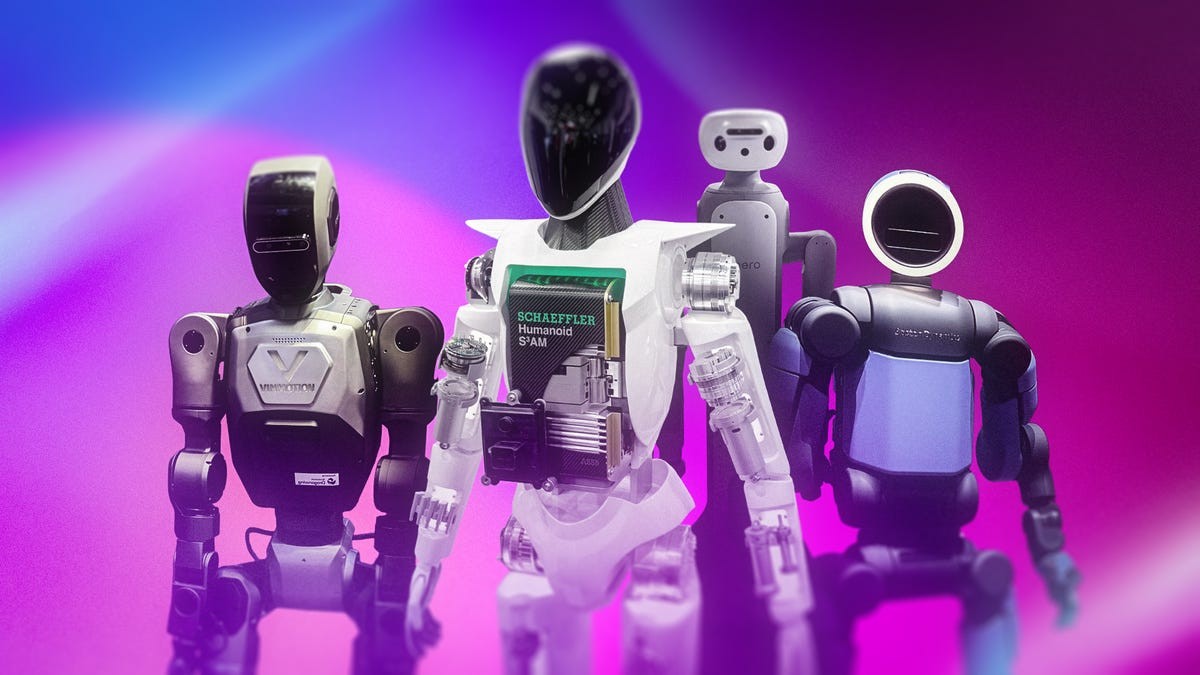
For over two decades, the phrase “the robots are coming” has lingered as a sci-fi trope. But at the Consumer Electronics Show (CES) in 2026, that future felt undeniably present. This wasn’t just another year of flashy prototypes; it was a pivotal moment where robotics transitioned from potential to reality, driven by breakthroughs in artificial intelligence.
The Long-Awaited Breakthrough
The shift wasn’t immediate. For years, CES showcased robots that were either gimmicks or lacked practical application. Most debuted with fanfare, then faded into obscurity. But this year, the tone was different. From Hyundai’s unveiling of the Boston Dynamics Atlas humanoid to Nvidia CEO Jensen Huang’s emphasis on “physical AI,” a fundamental change in perception took hold.
Nvidia’s Rev Lebaredian explained the core issue: “We didn’t have the technology to create the brain of a robot… until now.” The convergence of AI and robotics has unlocked algorithms capable of operating effectively in the physical world, transforming the capabilities of machines.
Physical AI: The Next Frontier
The concept of “physical AI” has emerged as an umbrella term encompassing everything from autonomous vehicles to advanced robots. Qualcomm’s Ahmed Sadek defines it as AI that not only perceives the environment but also acts within it. While self-driving cars were the first major expression of this, manipulating objects—not just avoiding them—is the next challenge.
This acceleration is due to the software finally catching up to the hardware. The development of self-driving vehicles laid the groundwork, and now AI is enabling robots to perform increasingly complex tasks. Nvidia and Qualcomm, along with emerging startups, are poised to capitalize on this opportunity.
Speeding Development: Humanoid’s Rise
Humanoid, a British company barely a year old, demonstrates the speed of this new era. Their HMND 01 robot was built in just seven months, leveraging the AI boom and talent from established robotics firms. With 25,000 preorders and pilot programs with Fortune 500 companies, their momentum is undeniable.
The commercialization of humanoid robots has exploded, with a 508% revenue increase in 2025 alone, reaching $440 million, according to IDC. This rapid growth isn’t just hype; it’s driven by real investment and technical feasibility.
The Factory-to-Home Transition
Boston Dynamics CEO Robert Playter acknowledges the hype but insists it’s grounded in reality. The company is preparing to deploy thousands of robots, not just for demonstration but for practical use. The initial focus, however, will be industrial settings, not homes.
Playter argues that robots need to mature in controlled environments before entering households. Safety and cost are major hurdles: “Companies are advertising that they want to go right to the home… We think that’s the wrong strategy.”
The first real application will likely be elder and disability care, where the demand is high and people are willing to pay a premium. Boston Dynamics estimates a potential $20,000 annual market for such services. Companion robots, like Tombot’s robotic labrador Jennie, are also becoming viable products.
A World with Robots: The Inevitable Future
The CES 2026 showcased a clear shift: robots are no longer a distant promise but an emerging reality. The convergence of AI, hardware advancements, and growing investment indicate that these machines will increasingly walk among us. The next decade will determine how seamlessly they integrate into our lives—first in factories, then potentially in our homes.
The age of robotics has arrived, and this year’s CES was the moment it became impossible to ignore.