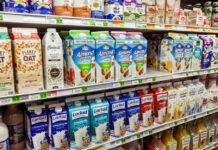





For decades, plant-based food options have become increasingly common. From meatless burgers at fast-food chains to realistic vegan nuggets in grocery stores, the market is expanding. However, one category stands out: plant-based milk. Despite growing availability, dairy alternatives haven’t yet displaced conventional dairy significantly. Now, the largest blind taste test ever conducted sheds light on why – and how the industry can improve.
The Rise of Plant-Based Alternatives and Environmental Concerns
Dairy production is a major contributor to climate change, and while plant-based milk, cheese, and ice cream offer a potential solution, they haven’t yet gained enough market share to make a substantial impact. This matters because reducing our reliance on dairy is crucial for both environmental sustainability and animal welfare. The industry’s environmental footprint rivals that of global air travel, and cows contribute significantly to water pollution.
The NECTAR Experiment: A Blind Taste Test of 98 Products
To understand the gap between consumer preferences and plant-based alternatives, the nonprofit NECTAR conducted a massive blind taste test involving 2,183 participants in San Francisco and New York City. Participants, including vegetarians, pescatarians, and omnivores, sampled 98 top-selling plant-based dairy products across ten categories – from milk and ice cream to cheese and yogurt – alongside their conventional dairy counterparts. Each product was tested in real-world scenarios (e.g., cream cheese on bagels, mozzarella on pizza) to ensure accurate results.
Participants rated each product on a seven-point scale, providing feedback on flavor, texture, and appearance. The results revealed a clear trend: most participants preferred conventional dairy over plant-based versions. However, some dairy-free products performed surprisingly well, suggesting significant potential for improvement.
Key Findings: Taste Parity and Product Gaps
On average, 65% of ratings for conventional dairy were “like very much” or “like,” while only 35% of plant-based dairy products achieved those levels. The quality among plant-based options varied widely, with some performing nearly as well as their dairy counterparts.
Only one product achieved “taste parity” with its dairy equivalent: Califia Farms’ Oat Barista Blend. In a head-to-head comparison with Horizon Organic whole milk, participants were equally divided in their preference. This demonstrates that plant-based alternatives can match conventional dairy in taste.
Other products, such as plant-based creamers, butter, and barista milk, also came close to dairy in consumer ratings. However, categories like yogurt and mozzarella lagged significantly behind.
Why Plant-Based Dairy Lags Behind
The results suggest that while some plant-based products are competitive, others fall short. This discrepancy might be due to several factors. One key issue is flavor: off-flavors and funky aftertastes were common complaints, particularly in yogurt and sour cream. Another is texture: participants often requested “increased richness” in ice cream, cream cheese, cheddar, and butter.
Stretchiness remains a major hurdle for vegan mozzarella, a problem that hasn’t been fully solved.
The Role of Price and Consumer Perception
Price sensitivity also plays a role. NECTAR found that if plant-based milk costs even 25% more than cow’s milk, 43% fewer people would buy it. In reality, soy and almond milk are often significantly more expensive than conventional dairy. This discrepancy is partly due to government subsidies and regulations that favor the dairy industry.
Furthermore, food preferences are shaped by childhood experiences, social norms, and cultural traditions, making widespread adoption of plant-based alternatives challenging.
The Path Forward: Improving Quality and Lowering Costs
To accelerate the growth of the plant-based dairy market, manufacturers should prioritize improving products in underperforming categories like yogurt and mozzarella. Addressing issues like off-flavors, texture, and stretchiness is crucial. Lowering prices to match or undercut conventional dairy will also be essential.
NECTAR plans to share its findings with companies and food service operations to drive product improvements and increase consumer awareness. The organization also emphasizes that while taste and price are important, broader systemic changes – including addressing subsidies and promoting sustainable practices – will be necessary for long-term success.
Ultimately, the future of dairy depends on making plant-based alternatives more appealing, accessible, and affordable. This requires a combination of scientific innovation, market adjustments, and policy changes to create a more sustainable and humane food system.