


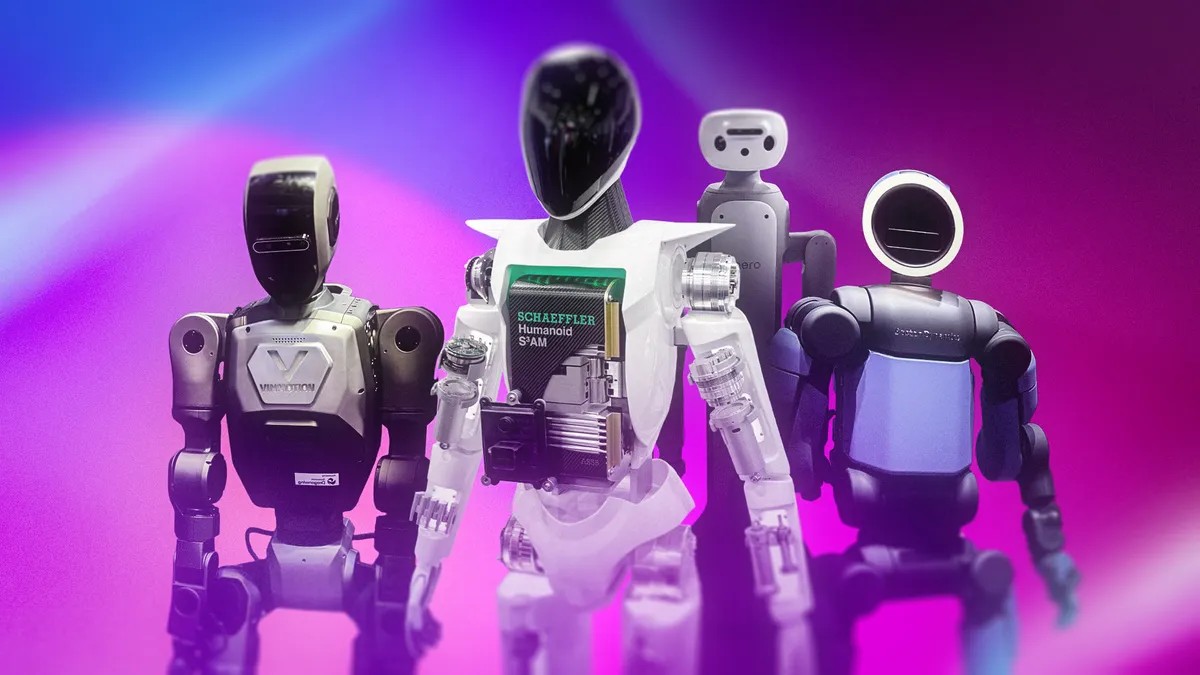
For decades, the idea of robots integrated into everyday life felt distant, relegated to science fiction. But the tone shifted dramatically at CES 2026: the robots aren’t coming—they’re already here. This wasn’t just another year of flashy demos; for the first time, the technology, the investment, and the serious intent aligned to suggest a fundamental change is underway.
The AI Revolution Powers Physical Robotics
The key isn’t just better hardware, but the convergence of artificial intelligence with the physical world. Until recently, creating robots with true “brains” was a bottleneck. Now, AI algorithms that drive language models are being applied to robotics, unlocking capabilities previously unimaginable. As Nvidia’s Rev Lebaredian puts it, “We’ve had this dream of having robots everywhere for decades… It’s been in sci-fi as long as we can remember.”
This isn’t about futuristic fantasies; it’s about practical applications. The initial focus is on automating tasks that are dull, dangerous, or dirty —jobs humans avoid. Companies are actively deploying robots in factories, filling labor shortages while improving efficiency. This is not a theoretical shift: the commercial humanoid robot market grew by 508% year-over-year in 2025, reaching $440 million in revenue, according to IDC.
From Prototypes to Production: The Industry Takes Shape
The turning point was visible at CES. Hyundai showcased the final production version of Boston Dynamics’ Atlas humanoid, while Nvidia and Qualcomm doubled down on “physical AI” platforms. The excitement wasn’t just about what could be built; it was about what was being built.
Humanoid, a British start-up, demonstrated its HMND 01 robot, capable of sorting car parts with precision. The robot was built in just seven months, thanks to the influx of AI talent and investment. With 25,000 preorders and pilots with Fortune 500 companies, this isn’t a gimmick; it’s a business taking off.
The Debate Over Form: Why Humanoids?
Some critics question the focus on humanoid robots, arguing they replicate human limitations. Nvidia’s Lebaredian disagrees: our world is designed for human-scale interaction, making humanoids ideal for general-purpose tasks. The flexibility of a humanoid form allows it to adapt to environments built for people.
The first wave of robots won’t be in homes; they’ll be in factories and warehouses, where safety can be carefully managed. Boston Dynamics CEO Robert Playter cautions against rushing robots into homes, emphasizing that the first real use case will likely be elder care, where the stakes are high. The long-term goal is mass production and affordability, making robots accessible beyond industrial settings.
The Future is Automated, But Not Immediately in Your Living Room
The hype around robots at CES was undeniable. But it’s backed by real investment and rapid progress. The shift from a “scientific problem of discovery” to an “engineering problem” means the technical hurdles are being cleared. Companies like Nvidia see this as a watershed moment: “It’s because, fundamentally, the experts… now believe, technically, it’s all possible.”
The timeline for consumer robots remains uncertain. Boston Dynamics envisions a future where robots assist with elder care, potentially at a cost of $20,000 per year. Companion robots, like Tombot’s robotic labrador, are already entering the market. The trend is clear: the robots are here, and they’re poised to reshape our world, one automated task at a time.