




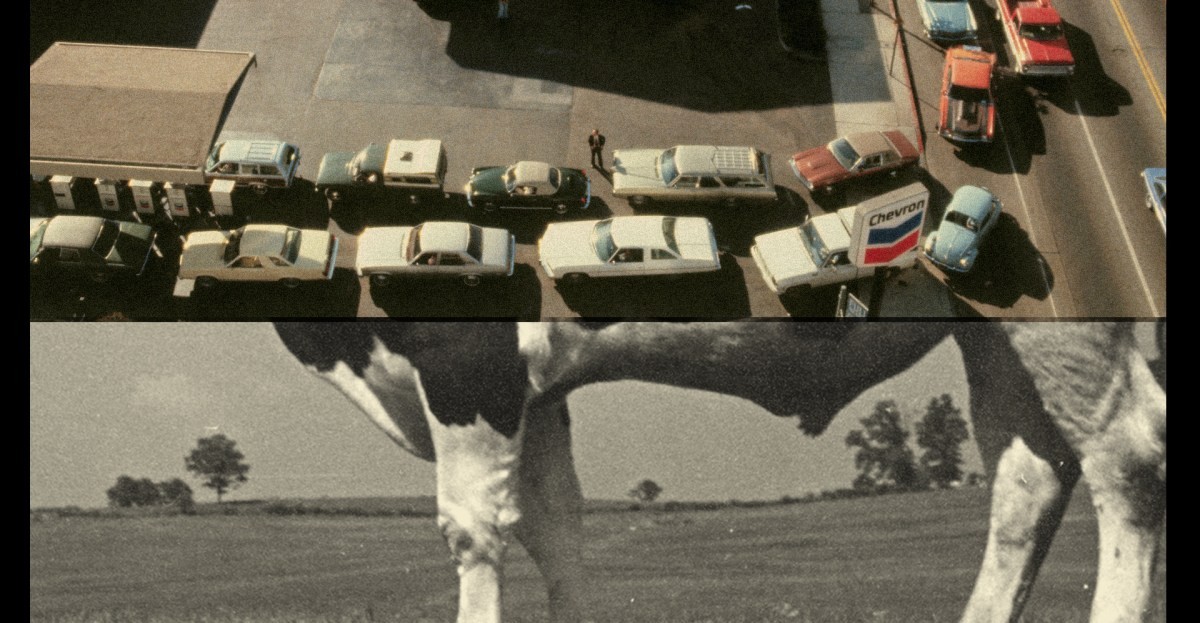
The debate between economic growth and environmental sustainability often frames these as mutually exclusive goals. However, a growing body of evidence suggests that decoupling economic progress from environmental harm is not only possible but essential. The United States, despite its wealth, exhibits significant inefficiencies in key sectors – particularly meat and dairy production, and its heavy reliance on personal vehicles. Addressing these inefficiencies is not about sacrificing prosperity but rather about directing growth toward more sustainable and productive avenues.
The False Dichotomy of Growth vs. Sustainability
The narrative that economic growth inherently clashes with environmental protection is increasingly outdated. The US, already one of the richest nations in history, possesses the resources and technological capacity to thrive while minimizing its ecological footprint. The idea of deliberately shrinking national income to save the planet is not only unrealistic but also counterproductive. A shrinking economy would lead to increased conflict over dwindling resources, potentially exacerbating the very problems it seeks to solve. Instead, the focus should be on maximizing economic output with minimal environmental damage.
Two Major Inefficiency Sinks: Meat and Cars
Two sectors stand out as particularly wasteful: animal agriculture and the automotive industry. Together, they account for roughly a quarter of US greenhouse gas emissions and consume vast amounts of land and resources. Neither is indispensable to economic growth; in fact, reallocating resources from these sectors could unlock more efficient and sustainable alternatives.
The Case Against Meat and Dairy
Animal agriculture is a major contributor to environmental degradation. Beef production emits approximately 70 times more greenhouse gases per calorie than beans, while poultry emits 10 times more. This inefficiency extends to land use, with livestock farming occupying over a third of habitable land globally and 40% in the lower 48 US states. Shifting towards plant-based diets would not only reduce emissions but also free up land for rewilding projects, enhancing carbon sequestration and biodiversity.
The economic impact of such a shift would be manageable. The agricultural sector constitutes a small percentage of US GDP, and transitioning to alternative protein sources could create new jobs in more sustainable industries. While some jobs may be lost in traditional farming, these transitions can be mitigated through retraining programs and investments in green technologies.
The Problem with Car Dependence
The US’s reliance on personal vehicles is another significant inefficiency. Transportation is the top source of greenhouse gas emissions, with cars accounting for around 16% of total emissions. Even with the rise of electric vehicles (EVs), simply swapping gas-guzzlers for EVs isn’t enough. The production of EVs requires significant energy and scarce resources, including steel and critical minerals.
The real issue is not the existence of cars but the car-dependent infrastructure that dominates American cities and suburbs. Sprawl consumes valuable land, fragments habitats, and exacerbates the housing crisis. Reducing car dependence through investments in public transportation, walkable urban design, and cycling infrastructure would yield substantial environmental and economic benefits.
Decoupling in Practice: Lessons from Energy
The US has already demonstrated the potential for decoupling economic growth from environmental impact in the energy sector. Carbon emissions from energy consumption have fallen by 20% since 2005 while the economy has grown by 50%. This success shows that similar decoupling is possible in other sectors, such as agriculture and transportation, through targeted policies and technological innovation.
The Trade-Offs and the Path Forward
The transition away from meat and car dependence will not be without challenges. Cultural resistance, political obstacles, and economic disruptions are inevitable. However, the long-term benefits – a more sustainable economy, a healthier environment, and a more resilient society – outweigh the short-term costs.
The key lies in recognizing that every economic choice involves trade-offs. Prioritizing high meat intake and extreme car dependence comes at the expense of planetary health and long-term prosperity. By embracing efficiency, innovation, and a willingness to challenge ingrained habits, the US can decouple growth from environmental destruction and chart a course toward a sustainable future.
The path forward is clear: invest in plant-based alternatives, prioritize public transportation, and redesign urban spaces to minimize car dependence. These steps are not about sacrificing progress but about redefining it.