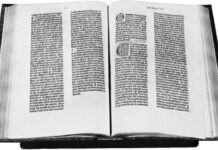


A palimpsest is essentially a literary ghost story written on skin. It is a manuscript, whether in roll or codex format, where an original text has been scraped away or washed off to make room for a new one. The surface looks clean. It carries only the newer writing. But under the right conditions, the old words remain, hidden in the fibers.
Experts call this state “in palimpsest.” The parchment is abraded, often damaged by centuries of reuse. Yet the underlying text is still there. You just cannot see it with the naked eye.
Recovering those lost words requires modern lab techniques. Scientists use ultraviolet light to illuminate the faint traces of the original ink. The chemical residues react differently than the fresh writing. This allows researchers to read what was erased long ago.
The practice wasn’t random. There were clear reasons for doing this. The primary driver was economic. Preparing fresh parchment from animal skins was expensive. It was cheaper to scrape down an existing sheet and reuse it. Conservation of resources mattered.
But money wasn’t the only factor. Religious motives also played a role. In some cases, Christian scribes converted pagan Greek manuscripts. They erased the old texts to install writings by Church Fathers. This was an act of piety. It was also an act of cultural overwrite.
These manuscripts are more than just reused paper. They are archaeological sites of ink. They show us how resources were managed in the past. They also preserve voices that might have been lost forever if the parchment had simply been discarded.
When you look at a palimpsest, you are looking at a compromise. A balance between cost and content. Between erasure and preservation. The technology to read these texts has changed. The reasons for creating them have not.
We still overwrite things today. Digital files. Hard drives. Cloud storage. The medium is different. The impulse to reuse, to repurpose, remains the same. The underlying text doesn’t disappear. It just waits for the right light.