




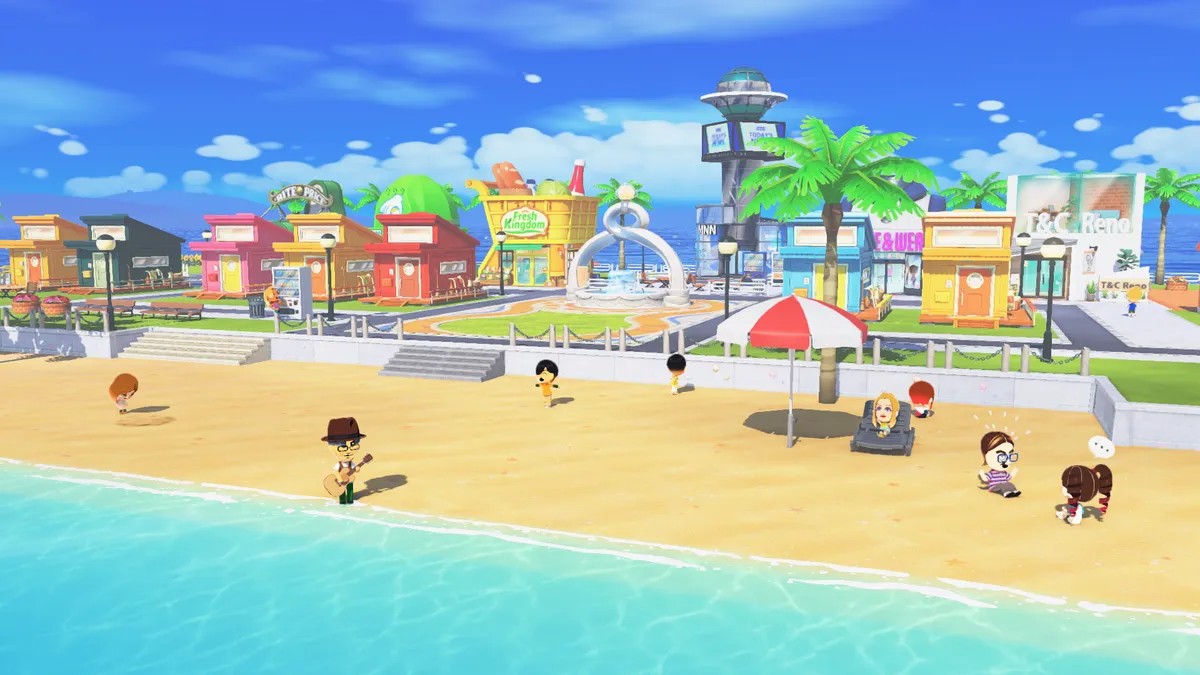
Nintendo has long been known for polished, charming experiences, but their latest offering, Tomodachi Life , leans into a much stranger territory. While it shares DNA with beloved titles like Animal Crossing, it swaps cozy community management for a surreal, unpredictable, and occasionally unhinged social experiment.
A God Complex in a Mii World
Unlike traditional life simulators where you control a specific character, Tomodachi Life casts you as an invisible, omnipotent force. You are not a resident of the island; you are its creator and observer. Using Nintendo’s iconic Mii avatars, players populate an island with custom characters, watch them interact, fall in love, argue, and engage in bizarre daily rituals.
The gameplay loop is less about direct control and more about curated chaos. You influence the world by:
– Feeding residents food to see their reactions.
– Dressing them in strange outfits.
– Suggesting conversation topics (ranging from “smooth grandmas” to random celebrities).
– Managing the island’s growth through new facilities like clothing stores and news stations.
This “ant farm” style of gameplay creates a sense of detached amusement. You aren’t playing a character; you are managing a digital ecosystem of personalities that, in turn, refer to you as the “Divine One.”
The Charm of the Absurd
The game’s strength lies in its unpredictability. The Miis possess unique, sometimes grating, generated voices and can undergo strange psychological shifts—dreaming of objects or obsessing over specific topics. This randomness makes for high-engagement “water cooler” moments, where a player might find their characters engaged in a nonsensical debate or a sudden, unexpected romance.
Notably, the game also shows a progressive side for Nintendo, allowing for nonbinary characters and gender-flexible relationships, providing a level of social inclusivity that is often missing from more traditional Nintendo titles.
Where the Experience Falters
Despite its charm, Tomodachi Life is not without significant drawbacks that may give potential buyers pause:
- Passive Gameplay: The lack of direct agency makes the experience feel somewhat “thin.” It lacks the deep engagement found in Animal Crossing: New Horizons or Pokemon Pokopia, often feeling more like a mobile app than a full console experience.
- Pricing Concerns: At a $60 price point, the game feels expensive for a title that is designed for short, sporadic sessions rather than deep, immersive play.
- The “Meme” Barrier: In an era where social sharing is central to gaming, Nintendo has curiously restricted the ability to easily share screenshots to mobile apps. Given how many “meme-worthy” and absurd moments occur in the game, this restriction feels like a missed opportunity for community engagement—or perhaps a way for Nintendo to avoid the liability of players sharing “awkward” or inappropriate generated moments.
Final Verdict
Tomodachi Life is a polarizing, eccentric experiment. It is a game for those who want to witness a digital fever dream and enjoy the role of a bored deity watching over a chaotic society. However, for players seeking deep mechanics or high-value gameplay, it may feel more like a strange curiosity than a must-play title.
Summary: Tomodachi Life is a surreal, Mii-driven social simulator that trades traditional gameplay for the chaotic joy of watching a digital society unfold. While its passive nature and high price tag may deter some, its unique brand of “unhinged” charm makes it a standout oddity in Nintendo’s lineup.