



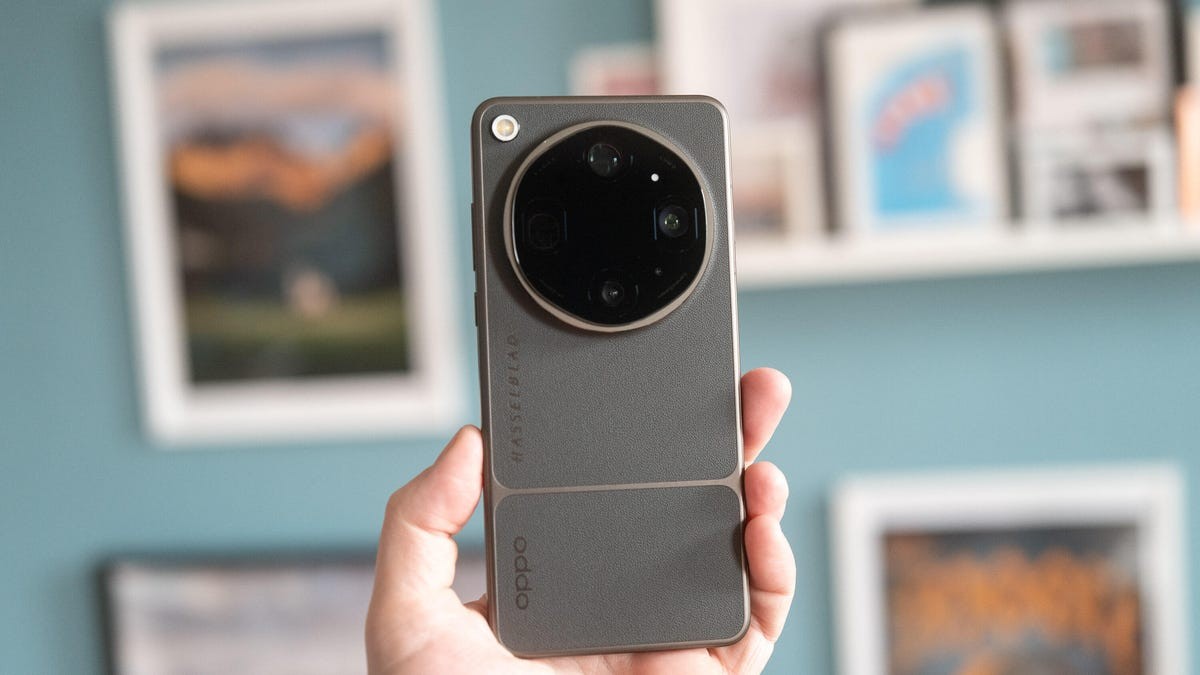
Oppo is doubling down on the “camera phone” niche with the Find X9 Ultra. Developed in partnership with legendary camera manufacturer Hasselblad, this device is clearly designed to serve as a mobile alternative to a dedicated camera bag.
While the previous Find X9 Pro earned critical acclaim, the Ultra pushes the boundaries further with a specialized lens suite and hardware-centric design. However, as the competition heats up, Oppo faces a difficult question: can hardware specs alone compete with the cutting-edge sensor technology of its rivals?
The Camera Suite: Power vs. Precision
The standout feature is undoubtedly the rear camera array. The device packs an impressive collection of lenses:
– 200MP Main Sensor for high-detail captures.
– 50MP Ultrawide lens.
– 200MP Telephoto with 3x optical zoom.
– 50MP Telephoto with 10x optical zoom.
For professional workflows, the Master Mode is a critical inclusion. It offers full manual control over ISO, shutter speed, and white balance, and allows for shooting in DNG RAW format. Notably, Oppo has promised that Master Mode uses zero generative AI for noise reduction or sharpening, ensuring that the images remain authentic to what the lens actually captured.
However, early testing has revealed some inconsistencies. There is a noticeable “bloom” effect around high-contrast areas, and some users may find the filmic presets to be a bit too heavy-handed, as they lack the ability to adjust the intensity of the effect.
The Competitive Landscape: Oppo vs. Xiaomi
The Find X9 Ultra enters a high-stakes battle against the Xiaomi Leitzphone (partnered with Leica). While Oppo offers a massive array of lenses, Xiaomi appears to be winning the “innovation war” regarding sensor technology:
– Sensor Tech: The Leitzphone utilizes LOFIC technology and a larger sensor for superior dynamic range.
– Zoom Mechanics: Xiaomi has introduced continuous zoom via moving elements, whereas Oppo relies on jumping between fixed focal lengths.
While Oppo’s hardware is formidable, it feels as though Xiaomi is pushing the technological envelope slightly further to attract purist photographers.
Design and Ergonomics
Aesthetically, the Find X9 Ultra succeeds in mimicking the professional feel of Hasselblad’s X2D cameras. The combination of metal and leatherette gives it a premium, tactile grip.
The design includes thoughtful touches like:
– An orange camera button that mirrors Hasselblad’s iconic shutter design.
– An IP69 rating, making it highly resistant to water and dust.
– A high-end 6.82-inch display with a 1–144Hz variable refresh rate and 10-bit color depth, making it excellent for photo editing in apps like Adobe Lightroom.
Performance, Battery, and the “Bloatware” Problem
Under the hood, the phone is a beast. It is powered by the Qualcomm Snapdragon 8 Elite Gen 5 processor, providing seamless performance in heavy tasks like high-end gaming.
Key Technical Specs:
– Battery: A massive 7,050-mAh silicon carbon battery that delivers exceptional longevity.
– Charging: Supports 100W wired and 50W wireless charging.
– Software: Runs Android 16 with Oppo’s Color OS, promising five years of major updates (until roughly 2032).
Despite the high-end internals, the software experience is marred by excessive pre-installed apps. For a premium device costing approximately £1,449 ($1,955), the presence of various third-party apps (Amazon, Temu, etc.) feels unpolished and cheapens the user experience.
Final Verdict
The Oppo Find X9 Ultra is a heavyweight contender in the mobile photography market. It offers professional-grade manual controls and incredible battery life wrapped in a beautiful, tactile design.
While it may lack the specific sensor innovations seen in the Xiaomi Leitzphone, its sheer versatility makes it a serious tool for enthusiasts.
The bottom line: If Oppo can prove its lens quality holds up under scrutiny and positions its price competitively against Xiaomi, it will be a formidable choice for mobile photographers.