



An attempted attack at the Washington Hilton on Saturday night has sent shockwaves through the American political establishment, highlighting a disturbing trend of targeted violence against high-profile figures. While the incident resulted in no serious injuries, it has reignited intense debates regarding security protocols and the volatile climate surrounding modern political discourse.
The Incident: An Attempted Breach
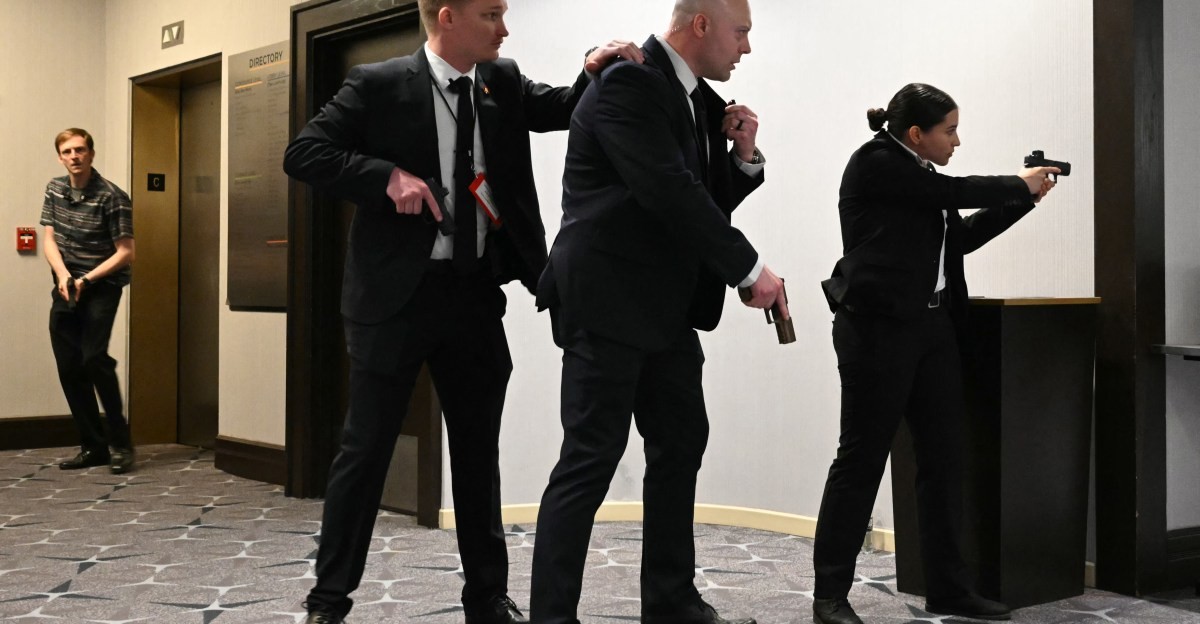
At approximately 8:30 PM ET, an armed individual attempted to breach a security checkpoint located outside the ballroom where the White House Correspondents’ Association (WHCA) annual dinner was being held.
According to official reports:
– The suspect was armed with a shotgun, a handgun, and knives.
– During the confrontation, a Secret Service agent was shot, though his body armor successfully absorbed the impact.
– Security personnel were able to subdue and arrest the suspect alive.
– President Donald Trump, who was set to deliver a keynote speech, was evacuated by Secret Service agents.
Following the attack, President Trump opted to follow law enforcement recommendations to postpone the event to a later date.
The Suspect and Motive
Authorities have identified the suspect as Cole Tomas Allen, a 31-year-old teacher and engineer from Torrance, California. Investigations reveal that Allen traveled across the country by train and had pre-booked a room at the Washington Hilton.
While the investigation is still active, several key details regarding his intent have emerged:
– A Manifesto: Before the attack, Allen reportedly sent a manifesto to his family members.
– Political Grievances: The document contained criticisms of the administration’s foreign policy in Iran, military operations against drug traffickers, and current deportation policies.
– Targeted Intent: The manifesto suggested Allen intended to target “administration officials” while attempting to avoid civilian casualties—though he expressed disappointment that the hotel’s security was weaker than he had anticipated.
A Room Full of Targets: The Context of Political Violence
The shooting is particularly chilling because of the specific individuals present in the room. The guest list served as a grim reminder of the recurring nature of political violence in the United States:
- President Donald Trump: A survivor of two assassination attempts during the 2024 campaign.
- Rep. Steve Scalise (R): A survivor of the 2017 Congressional baseball practice shooting.
- Rep. Jared Moskowitz (D): A key figure in the January 6 investigations.
- Erika Kirk: Whose husband, Charlie Kirk, was recently killed at a campus event.
- Robert F. Kennedy Jr.: Whose family history is defined by the assassinations of his father and uncle.
The choice of venue also carries historical weight; the Washington Hilton is the same location where President Ronald Reagan was shot in 1981, a fact that has long contributed to the hotel’s reputation for being a high-risk site for political gatherings.
The Role and Controversy of the WHCA
The White House Correspondents’ Association is a nonprofit dedicated to representing journalists who cover the federal government. Its annual dinner is a storied Washington tradition, traditionally featuring a comedic keynote and a tribute to the First Amendment.
However, the event has long been a lightning rod for criticism:
– Critics argue the dinner fosters an overly cozy relationship between the press and the politicians they are meant to scrutinize.
– Political tensions have historically surrounded the event; President Trump previously boycotted the dinner due to his friction with the media, though he agreed to attend this year as the honoree.
Looking Ahead
The immediate legal and legislative repercussions are expected to move quickly:
1. Legal Proceedings: Cole Tomas Allen is scheduled to appear in federal court this Monday.
2. Security Reviews: U.S. Senators are planning briefings with the Secret Service this week to address the security lapses identified during the breach.
3. Political Debate: President Trump has already used the incident to advocate for his proposal to build a dedicated White House ballroom, arguing that centralized, high-security venues are necessary for such gatherings.
The attack at the Washington Hilton serves as a stark reminder of the escalating risks faced by political figures and the media, prompting urgent questions about the adequacy of security for high-profile public events.