


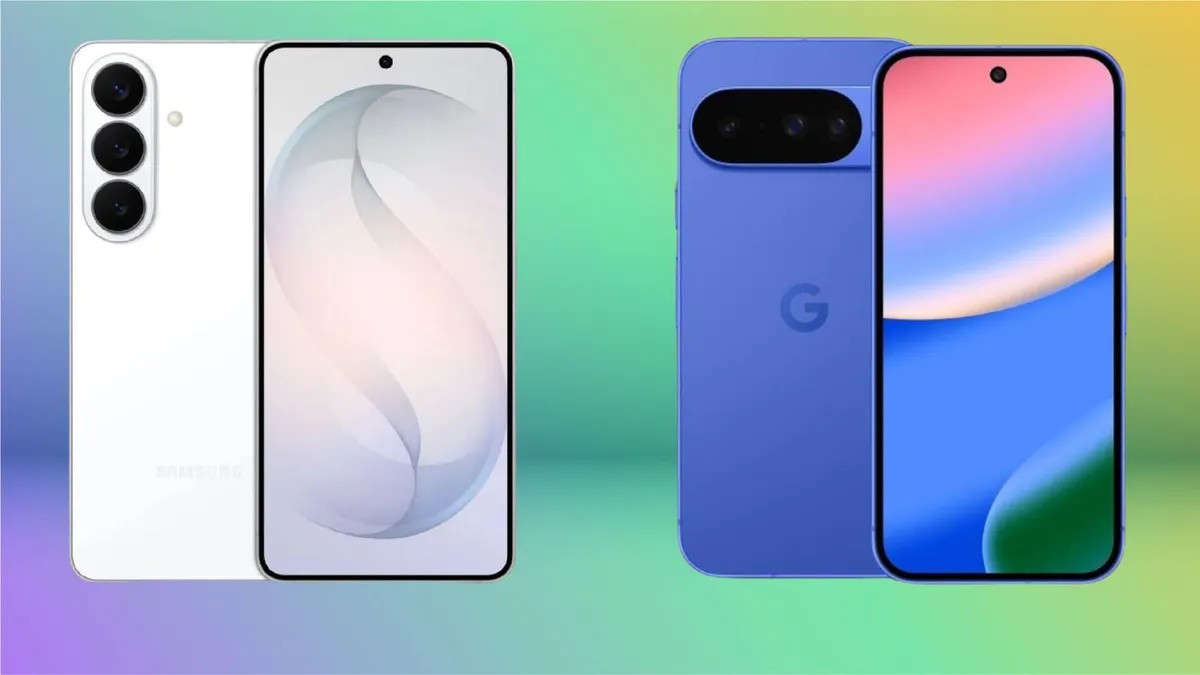
When choosing a flagship smartphone, many consumers gravitate toward the “Ultra” or “Pro” models. However, the standard versions—the Samsung Galaxy S26 and the Google Pixel 10 —are often the most practical choices for the average user.
While both devices represent the pinnacle of the Android ecosystem, they offer fundamentally different philosophies regarding hardware, software, and value. This comparison breaks down how these two compact powerhouses stack up against each other.
Design and Display: Immersion vs. Visibility
Both phones feature 6.3-inch displays, but the viewing experience differs significantly due to their technical specifications.
- The Samsung Galaxy S26 focuses on immersion. It features thinner bezels and a more lightweight design (167g), making it exceptionally comfortable for one-handed use. Its AMOLED screen reaches 2,600 nits of peak brightness and utilizes a variable refresh rate that can drop as low as 1Hz to conserve battery.
- The Google Pixel 10 prioritizes outdoor legibility. With a peak brightness of 3,000 nits, it is easier to read in direct sunlight. However, it is noticeably heavier at 204g and its refresh rate only scales down to 60Hz, making it slightly less power-efficient during low-intensity tasks.
Note on Durability: Both devices are highly resilient, boasting IP68 water/dust resistance and Gorilla Glass Victus 2 protection.
Camera Capabilities: Versatility vs. Detail
Both manufacturers have leaned heavily into AI-driven photography, but their hardware approaches differ.
Samsung Galaxy S26
Samsung utilizes a triple-lens setup: a 50MP wide, 12MP ultrawide, and a 10MP 3x telephoto lens. A standout feature this year is the “Horizontal Lock” stabilization, which provides gimbal-like steadiness for video. Samsung’s AI suite is robust, offering tools for object removal and even “outfit changing” via photo prompts.
Google Pixel 10
Google offers a 48MP wide, 13MP ultrawide, and a 10.8MP 5x telephoto lens. While the telephoto lens may lack some fine detail compared to Samsung, Google’s software excels at preserving textures—such as flower petals or leaf ridges. The Pixel’s AI is centered around utility, most notably the Magic Eraser for removing unwanted elements from shots.
Performance and Battery Life
Under the hood, these phones are powered by different architectures, which dictates their strengths:
- Processing Power: The Galaxy S26 uses the Snapdragon 8 Elite Gen 5 (optimized specifically for Galaxy AI), which outperforms the Pixel 10’s Tensor G5 in benchmarks and 3D gaming.
- Efficiency: Despite having a smaller physical battery (4,300 mAh vs. Google’s 4,970 mAh), the Samsung S26 is more efficient due to its superior chipset, lasting slightly longer during tasks like video streaming.
- The Storage Catch: While the Pixel 10 is $100 cheaper at base price, it starts with only 128GB of storage. To match the Galaxy S26’s base 256GB, you must pay the same $899. In an era of high-resolution media, 256GB is increasingly considered the modern baseline.
Software: Customization vs. Simplicity
Both phones offer seven years of OS and security updates and run on Android 16, but the user interface (UI) experience is worlds apart.
- One UI (Samsung): Designed for power users. Through the Good Lock app, users can implement deep customizations, such as advanced gesture shortcuts and transparent widgets. It offers more “tools” but comes with more pre-installed software (though much of it is removable).
- Pixel UI (Google): Designed for enthusiasts of the “clean” Android experience. It is minimalist, lacks the bloatware found on Samsung, and features smart contextual tools like Magic Cue, which surfaces relevant information (like hotel booking details) during active tasks.
Summary Comparison
| Feature | Samsung Galaxy S26 | Google Pixel 10 |
|---|---|---|
| Starting Price | $899 (256GB) | $799 (128GB) |
| Weight | 167g (Lightweight) | 204g (Heavier) |
| Peak Brightness | 2,600 nits | 3,000 nits |
| Chipset | Snapdragon 8 Elite Gen 5 | Google Tensor G5 |
| Base Storage | 256GB | 128GB |
Conclusion: The Samsung Galaxy S26 is the superior choice for users who prioritize performance, lightweight design, and deep software customization. The Google Pixel 10 is better suited for those seeking a brighter outdoor display, a cleaner software experience, and a lower entry price—provided they can live with less base storage.