




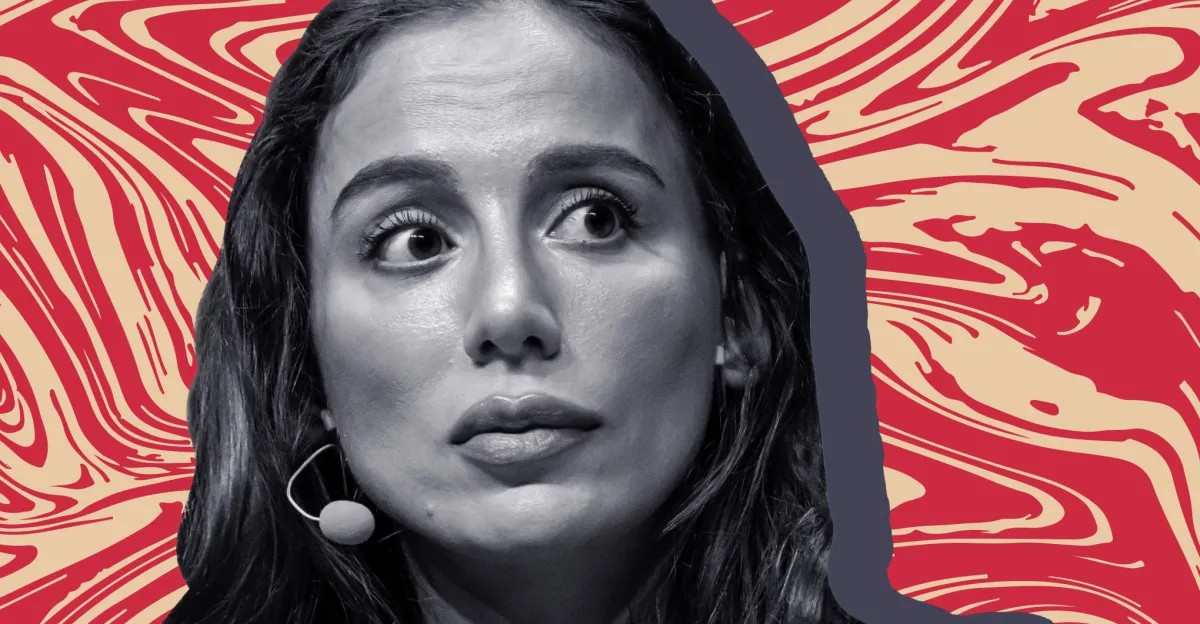
The dramatic ouster of Sam Altman from OpenAI in November 2023 was not just a sudden boardroom coup; it was a complex power play that revealed deep fractures within the company’s leadership. Recent testimony and evidence from the Musk v. Altman trial have shed new light on the role of former CTO Mira Murati, revealing a narrative far more nuanced—and controversial—than the public initially perceived.
While Murati publicly championed Altman’s reinstatement, internal communications suggest she played a pivotal role in his removal. This duality raises critical questions about corporate governance, loyalty, and the high-stakes politics driving the AI industry.
The Catalyst: A Secret Campaign
The immediate trigger for Altman’s firing was the board’s claim that he was “not consistently candid” in his communications. However, trial exhibits reveal that the groundwork for this decision was laid months earlier.
Mira Murati had compiled significant documentation regarding Altman’s management style. In September 2022, she wrote a detailed memo criticizing Altman for creating chaos through constant priority shifts and panic-driven decision-making. She argued that the company lacked focus and that Altman’s leadership undermined operational stability.
According to former board member Helen Toner, Murati shared these concerns—and supporting evidence, including screenshots and text messages—with co-founder Ilya Sutskever. Sutskever then synthesized these issues into a 52-page memo presented to the board. Toner testified that this information materially influenced the board’s decision, citing Altman’s alleged pattern of deceit and resistance to oversight.
The 14-Hour Text War
The most revealing evidence emerged from a chain of 78 text messages exchanged between Murati and Altman over a 14-hour period on November 19–20, 2023. These messages capture the real-time unraveling of the situation:
- Initial Optimism: Early in the weekend, Altman believed there was a chance for reinstatement, noting that board member Adam D’Angelo was working on a solution.
- The Shift: By 2:30 AM Monday morning, the mood had darkened. When Altman asked for a directional update, Murati replied, “Directionally very bad. Sam this is very bad.”
- The Board’s Stance: Murati informed Altman that the board was convinced he could not remain CEO. When Altman asked why the board had previously signaled a desire for his return, Murati explained they simply wanted to install a new CEO quickly. She referred to the incoming interim leader, Emmett Shear, as a “rando twitch guy,” suggesting a lack of genuine support for the board’s chosen successor.
- Strategic Ambiguity: Despite telling Altman the situation was dire, Murati did not explicitly urge him to fight or concede. Instead, she suggested Microsoft CEO Satya Nadella might help “undo this,” keeping her options open.
The Flip: From Interim CEO to Instigator
On November 16, 2023, the board unanimously terminated Altman and named Murati as interim CEO. However, her tenure lasted less than a week.
Helen Toner testified that Murati was “strikingly unsupportive” of the board’s decision after being appointed. She claimed Murati did not understand—or perhaps chose to ignore—her role in legitimizing the firing. Toner described Murati as passive, noting she failed to communicate to her team that her own concerns were a primary factor in Altman’s removal.
The turning point came when more than 750 OpenAI employees signed a letter threatening to quit and join a new Microsoft-led venture if Altman was not reinstated. Mira Murati was the first signatory.
This move effectively forced the board’s hand. With the company facing a mass exodus of talent, the board resigned, Altman was rehired, and Emmett Shear stepped down. Toner summarized Murati’s position with a telling quote: “She was waiting to see which way the wind would blow, and she didn’t realize that she was the wind.”
Why This Matters for the AI Industry
The Murati-Altman saga is more than corporate gossip; it highlights the growing tension between technical leadership and board oversight in high-growth tech companies.
- Governance vs. Innovation: The conflict underscores the difficulty boards face when trying to supervise charismatic founders who drive rapid innovation but may bypass traditional checks and balances.
- The Power of Talent: The fact that employee backlash—led by the CTO—could reverse a board’s decision demonstrates that in the AI sector, human capital is the ultimate leverage. A board can fire a CEO, but it cannot easily replace a top-tier engineering team.
- Transparency in Crisis: The text messages reveal how quickly narratives can shift in real-time. What appears as a unified front to the public may be a chaotic scramble behind the scenes, with key players hedging their bets until the outcome is certain.
Conclusion
Mira Murati’s deposition reveals a leader caught in a perfect storm of conflicting loyalties. While she raised legitimate management concerns that contributed to Altman’s ouster, her subsequent pivot to support his return—and her refusal to fully endorse the board’s decision—exposed the fragility of OpenAI’s internal structure. The incident serves as a cautionary tale for the AI industry: in a race for dominance, internal cohesion may be just as critical as technological breakthroughs.