



The U.S. recycling industry has experienced a massive identity crisis over the past three decades. In the early 1990s, the participation bar was set very high. You must become a sorting machine. Paper went here. Plastic there. Glass? This requires its own color-coded section. It’s boring. It was specific. Honestly, it’s exhausting.
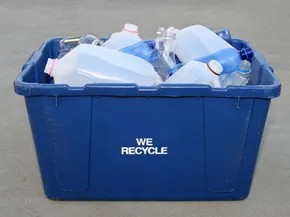
In the late 1990s, single-stream recycling became a salvation for those who found sorting a chore. Throw everything in the blue box. At the processing plant, magnets pull the steel out, jets blow away the paper, and sensors do the rest. Recycling at the roadside is possible. This makes your job easier.
But let’s be honest about the realities of modern recycling. The barrier to entry isn’t just sorting anymore. This is logistics.
Imagine it’s January. The temperature is -10 degrees. I finish my beer. When you hold an empty can in your hand, it feels cold. You are looking at the recycling bin at the end of the driveway. It’s buried under three feet of snow. You look at the kitchen counter. It’s cluttered. You don’t want to step outside in your robe. The last thing you want to do is drop an aluminum can while walking in the snow.
We have trash cans for your trash. They sit right next to the stove. We have a compost bin for food waste. But where is the recycle bin for everyday users?
Most people solve this problem by using a plastic bucket or shopping bag under the sink. It works for a few days. Then the bag exploded. Or the tub overflows. Suddenly, your environmental goals are reinforced by a pile of unsorted waste that smells like old tomato sauce. The difficulty of “delivering” recyclable materials is often greater than the moral benefit of “delivering” them.
Because of this friction, all-in-one recycling systems are popular among tech-savvy homes and eco-conscious designers. It’s not just a bigger bin. This is a mechanical solution to a behavior problem.
How the countertop recycling system works
These devices look like kitchen appliances. Some resemble garbage disposals. Others look like small dishwashers. But their function is distinct. They put every possible recyclable item, including glass, paper, plastic and cans, into a multi-gallon bin.
The magic happens inside. Much of the recycled material is crushed into a compact size. This serves two purposes. First, the volume is significantly reduced. You can now fit weeks of recyclables in a space that previously only took three days. Second, it keeps the waste contained. No broken glass. No jagged cardboard. Just dense, manageable blocks of material.
This means you don’t have to hit the pavement in your pajamas when it’s cold. You also aren’t living in a kitchen overflowing with evidence of your eco-friendliness. Now all you have to do is wait for the collection truck.
The technology behind these systems varies. Some use hydraulic presses. Others use high-speed shredders. The goal is always the same: Making recycling as smooth as throwing it in the trash.
Why one stream is not enough
We often believe that single stream recycling will solve the recycling crisis. This is not true. Move the problem from the kitchen to the kitchen
State Product General recycling center: Mechanical press
A regular kitchen trash can is technically an “all-in-one” system if you just throw paper, plastic and glass into the same hole. This is lazy recycling. This is also ineffective. The market has moved past basic bins. Now there is a high-tech solution.
Why buy an integrated recycling system? Convenience is the main driver. It is convenient to have your own waste area. Even better are machines that shred waste and reduces your trips to the curb. Efficiency is important.
Enter Mode Products. An American company developed this device for more than just storing trash. It processes it. Its core feature is a mechanical crusher. Recycled materials are reduced to about a third of their original size. Plastic bottles and aluminum cans cannot withstand a front-mounted mechanical shredder.
There is no electricity here. Pull the lever on the bottom of the device. This will start the compactor. Shredded material falls into a 30.3 liter (8 gallon) hopper. Mechanical systems are inherently more environmentally friendly than electrical systems. No power consumption. Just human force.
But be careful. Don’t put everything in there.
Recycling centers use magnets and lasers to separate materials. They struggle with residual waste. Shredded shards of glass are a profit-killer in these premises. Especially when glass are mixed of different colors. Mode Products understands this limitation. They designed the system based on that.
The rear slot handles glass. It goes straight to the main tank. The design prevents bottles from shattering. Glass stays intact.
The paper goes elsewhere. Junk mail or newspapers can be accepts junk mail and newspapers. That leads to a separate 5-gallon bin. You now have two distinct containers. Total capacity is 13 gallons (49.2 liters). That’s significant volume reduction.
What if I forget to remove the liner? The device is equipped with an alarm. It is configurable. It alerts you when the collection date is approaching. If you want your device to know you’re a good person, this is the way to go. The digital display also tracks weight. It gives a running tally in pounds. You can see exactly how much is recycled over time.
Single stream recycling is developing. The next step is an all-in-one system. In the future, there may be robots that deliver trash to the curb. No robe required.
Books related to the topic
- How the FoodSaver system works
- How can my spoon taste food for me?
- How do I open the front door when I’m out?
- How Robotic Vacuums Work
- How security cameras work
Sources
-
Kiely, Michael. “All in One Household Recycling System with Mechanical Press” The Green Head. (Accessed 1 February 2009.) http://www.thegreenhead.com/2008/11/mode-all-in-one-recycling-system.php
-
“Americans welcome 2009 with greener solutions.” BusinessWire. 30 December 2008. (1 February 2009) http://www.allbusiness.com/reports-reviews-sections/polls-surveys/11735658-1.html
-
“The integrated recycling center model simplifies home recycling and eliminates kitchen clutter.” Reuters. January 22, 2009 (January 31, 2009) http://www.reuters.com/article/pressRelease/idUS165154+22-Jan-2009+BW20090122
・”High quality all-in-one recycling center.” Mode Products. (31 Jan 2009)http://www.modeproducts.com/products/premium_features.php