



It used to be that tapping a phone to pay for gas or groceries felt like a scene from a sci-fi movie. Now, it’s just Tuesday. The engine behind this convenience is near-field communication (NFC ) technology, specifically the small smart tags embedded in everything from posters to credit card terminals.
NFC isn’t reinventing the wheel. It’s a wireless radio standard, sitting right next to Bluetooth and WiFi in the connectivity family tree. Its closest relative—and effectively its parent—is RFID (radio frequency identification). You’ve probably seen RFID in the wild. Retailers use it to track inventory. Shipping companies rely on it for logistics. You might tap an RFID badge to get into your office.
NFC works similarly but with a strict personal space requirement. While RFID can read tags from several feet away, NFC readers have a maximum range of about 4 inches (10 centimeters). That short range makes them useless for warehouse inventory but perfect for applications where quick, secure data exchange is key. You have to be close. You have to intend to interact.
Unlike specialized RFID scanners, NFC chips are embedded in your smartphone’s circuitry. Your local store’s point-of-sale system likely has the same hardware. To buy something, you unlock your phone, approve the transaction, and hover it over the reader. No cash. No cards. Just proximity.
But NFC does more than facilitate payments. Consider a political flyer. If it contains a smart tag, tapping your phone doesn’t just register a read. It directs you to a candidate’s website, instantly downloading a biography text file and an image to your device. Or think about dining out. Touch your phone to an NFC-tagged menu at your favorite restaurant. Suddenly, the menu is on your screen, complete with nutritional data and descriptions of the ingredients. If that reader is linked to a payment system like Apple Pay or Google Pay, you could theoretically pay without ever typing in credit card details.
The friction in adopting NFC often lies in the software. You need hardware to read the tags and apps to process the data. For years, downloading and setting up a new app for every new service—like renting a scooter—was a barrier. It was annoying. Sometimes it was prohibitive.
Then came App Clips.
Apple introduced this feature in its iOS operating system in 2020. The concept is simple. Scanning a special NFC code allows you to conduct a transaction without downloading a full app. Rent a scooter. Pay for gas. Do it instantly. The app runs in a lightweight container, does the job, and disappears. This removes the biggest hurdle to entry for casual NFC users.
The potential uses for NFC tags seem infinite. But what exactly gives these tiny chips their power?
How NFC Tags Work
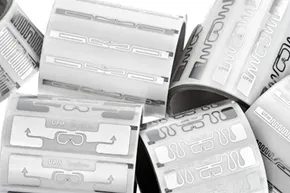
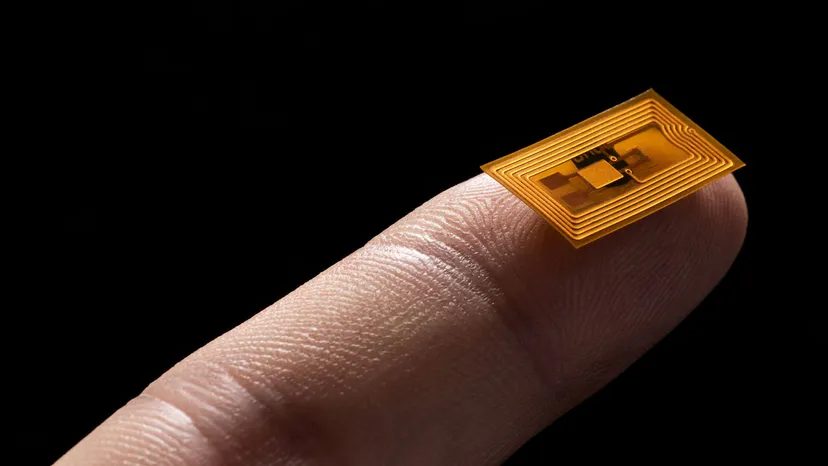
NFC tags share a basic architecture with RFID tags. They both contain storage memory and a radio chip connected to an antenna. The key difference is that NFC tags are formatted specifically for NFC systems. They are small and cheap enough to embed in posters for circus tours, ski lift passes, stickers, business cards, prescription bottles, and even ruggedized outdoor labels.
The Physics of Passive Power
NFC tags are passive. They lack a power source. Instead, they draw energy from the reader via magnetic induction. When a device gets close enough, it energizes the tag and transfers data. You can find more details on this process in guides about wireless power.
There are five types of NFC tags. Each has different capacities, speeds, and read/write capabilities.
- Type 1: Stores 93 bytes to 2 kilobytes. Speed is 106 Kbps.
- Type 2 & 3: Similar to Type 1 in rewritability.
- Type 4: Until recently, the biggest and fastest. Stores up to 32 KB. Speed up to 424 Kbps.
- Type 5: Stores up to 64 bytes. Speed is 26.58 Kbps.
All NFC tags are technically read-only. However, types 1, 2, and 3 can be rewritten. You can buy blank rewritable tags. They can be rewritten thousands of times. You can also block them to prevent overwriting.
Larger memory and antennas mean bigger physical tags. Sizes range from a centimeter or two to a few inches.
Cost and Scale
Memory capacity and speed dictate cost. This matters for companies spreading information via smart posters or flyers. In 2012, tags cost around 30 cents each. Even in bulk. By 2020, prices dropped to less than 10 cents for large orders. This allows rapid dissemination in countless places.
FAQ: Common Questions About NFC Tags
What is an NFC tag?
Near-field communication tags are a form of close-range wireless radio communication.
What are NFC tags used for?
They excel in applications requiring quick exchange of small amounts of digitized info. A common use is mobile payments. Some phones tap readers to pay. Potential uses have no real limits.
How do NFC tags work?
They are passive. They draw power from the reader via magnetic induction. Proximity energizes the tag and transfers data.
Are NFC tags rewritable?
Types 1 through 3 are rewritable. You can block them to stop further rewriting.
What do phones use NFC for?
Beyond payments, phones use it for travel boarding passes. They also send contacts, directions, or photos to nearby devices.