




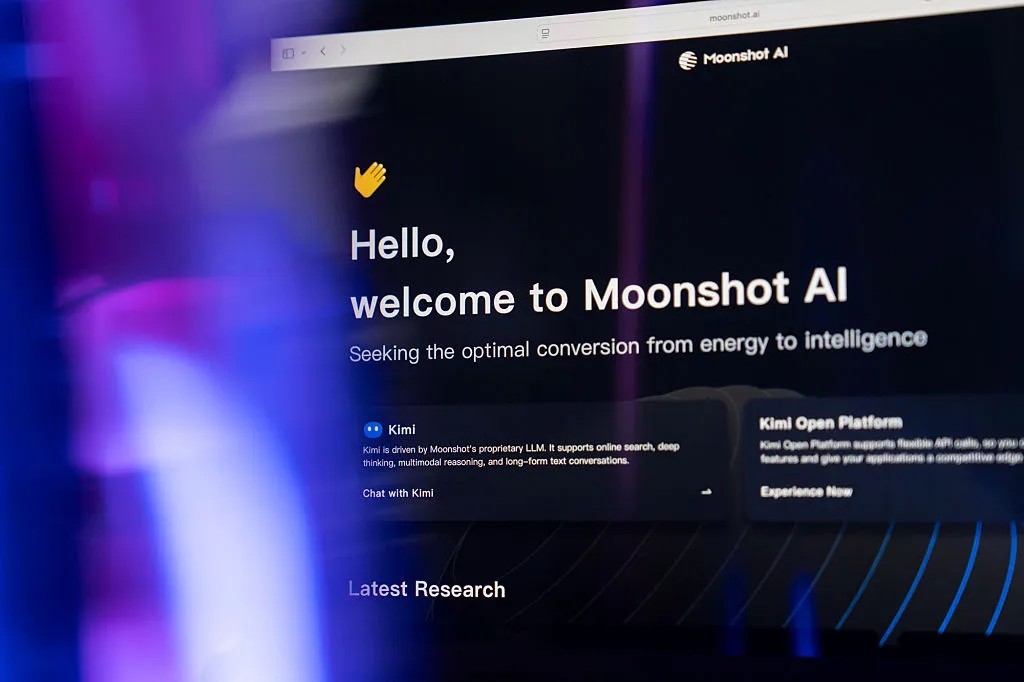
Moonshot AI dropped Kimi K3 this week.
It’s another step up in the ladder for China’s generative AI engine.
And, naturally, the tech world lost its collective mind.
The headlines are screaming again. The discourse is recycled. But this time, the stakes feel sharper. The air feels thicker. We are three years out from the DeepSeek R1 shockwave, living under a trade war, and staring down the IPO gates of major AI firms.
So why does this matter now?
Kimi K3 isn’t just a beta test. Moonshot claims it “demonstrated frontier-level performance.” That’s bold language.
They admit it still trails Claude Opus 4 and GPT-5o.
But look closer at the benchmarks.
Arena.ai and Vals AI put out their own numbers. They say Kimi is competitive with the flagship models you pay extra for. Independent analysis suggests it’s not just keeping up—it’s pushing.
Then the market reacted.
Wall Street spooked.
The Nasdaq dipped roughly 1% on Friday. Chip stocks took a hit. Nvidia sold off.
Why? Because investors don’t like uncertainty. And an open-weight Chinese model that works well is pure uncertainty.
This coincided with a speech by President Xi Jinping at the World AI Conference in Shangxia.
Timing doesn’t prove causality, but in finance, perception is reality.
The “Distillation” Debate Heats Up
The comments section filled with familiar faces.
David Sacks, former Trump administration AI czar and current co-chair of the President’s Council of Advisers on Science and Technology, didn’t hold back.
He contrasted China’s rapid progress with the United States tying itself in knots.
Sacks argued that American politicians and bureaucrats are banning new data centers. They are piling on state regulations. They are pushing for federal agencies to pre-approve every frontier model.
“This is how you lose the AI race,” he wrote.
He also used the moment to take a swipe at Anthropic. He called Claude examples of “woke lobotomized models.”
He called them “the enemy of American competitiveness.”
Hard words.
Travis Kalanick, the former Uber CEO, echoed a different complaint.
He said China is “distilling off” American AI models.
In plain English? Training Chinese models on the outputs generated by American ones.
Kalanick argued that if distillation isn’t stopped, then everyone should be allowed to do it. Otherwise, one arm is tied behind American models’ backs.
His logic?
Fair play.
But here’s the kicker: American models have been built on top of Chinese data, too. Specifically Kimi.
It’s a messy web of dependencies. You can’t un-invent the internet.
Dean Ball’s Dystopian Vision
Dean Ball, head of strategic futures at OpenAI, offered a more nuanced take.
He admitted Kimi is a “very good model.”
He said its performance probably can’t be explained away by distillation alone.
So why is he surprised?
He’s stunned that the Chinese state allows open-sourcing of models this capable, given the potential risks.
Ball sees a darker future.
He suggested a probable outcome of an open-weight-dominant world is “full AI communism.”
Think about that phrase.
He envisions AI treated as a public good. Provided by the state. Like digital public infrastructure.
“This future strikes me as a dystopian dystopia,” Ball said.
He added that he’s never met an open-weight advocate who doesn’t concede this is where things ultimately end.
He’s not worried about banning open source.
He calls that “one of the dumber motifs of the AI policy discussion.”
Bans are easy. Enforcement is hard.
Ball suggests a smarter tactic.
Regulatory risk.
He proposed directing every agency to issue soft laws that create FUD—Fear, Uncertainty, and Doubt.
Imagine a scenario.
A Federal Reserve advisory bulletin finds potential backdoors in Chinese AI models.
Does it need to be well justified? No.
It just needs to be enough to scare enterprise customers.
Regulated enterprises back off when the compliance costs rise.
That’s how you neutralize a threat without a ban.
Where Do We Go From Here?
The Kimi K3 release exposes the cracks in the current system.
China is moving fast. Open source is accelerating the spread of technology.
The US is bogged down in red tape and internal political fighting.
Sacks sees the US losing. Ball sees a dystopian future of state-controlled AI. Kalanick sees unfair competition.
The market saw a dip in stock prices.
But the real question isn’t which model is better.
It’s whether we can build guardrails that actually work in a borderless digital world.
Or if we’re just shouting into the void while the code compiles itself.