



The concept of “putting a monitor on your face” may sound like a niche gimmick, but the category of plug-in display glasses has matured rapidly. While many consumers may not yet feel the need for a wearable screen, the technology has reached a level of sophistication that makes it a legitimate tool for productivity and entertainment.
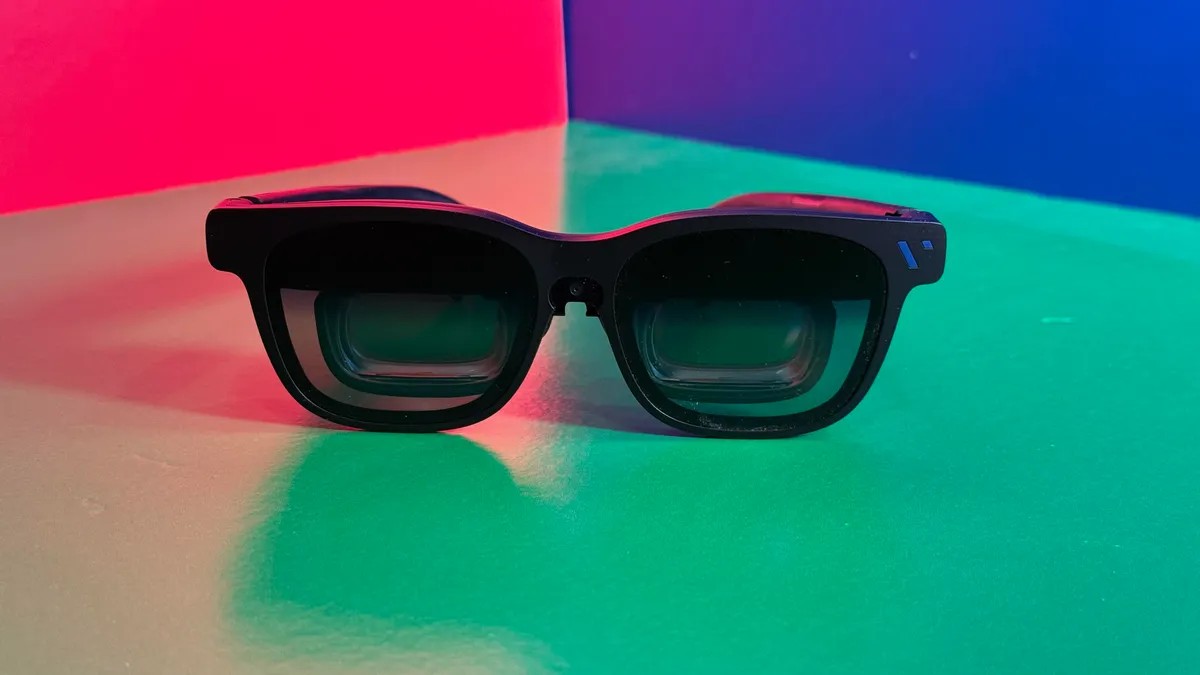
Among the top contenders in this space, the Viture Beast has emerged as a standout performer, earning CNET’s 2026 Editor’s Choice Award. It offers a compelling alternative to the industry-leading Xreal One Pro, balancing high-end specs with a more accessible price point.
A Cinematic Powerhouse in Your Pocket
The Viture Beast is designed primarily as a high-end audiovisual device. For users who spend significant time gaming on a Steam Deck, watching movies on a smartphone, or working on a laptop, these glasses offer a transformative experience.
Superior Visuals and Audio
The core of the Beast’s appeal lies in its micro-OLED displays. Compared to its main rival, the Xreal One Pro, the Viture Beast offers several key technical advantages:
– Extreme Brightness: Reaching up to 1,250 nits (compared to Xreal’s 700 nits), the display is incredibly vivid, making it easy to overpower ambient light.
– Enhanced Resolution: With a resolution of 1,920 x 1,200 per eye, it provides a sharper image than the standard 1080p found in many competitors.
– Wider Field of View: At 58 degrees, the display feels expansive, creating a “personal cinema” effect.
– Immersive Sound: The onboard audio, powered by Harman, delivers impressive quality that complements the visual experience.
Intelligent Display Features
Viture has implemented several software features that move these glasses beyond simple screens:
– 3DOF “Pinning”: Using three degrees of freedom, you can “pin” a virtual monitor in space. This allows you to move your head without the screen shifting with you, which is essential for reducing eye strain during long work or gaming sessions.
– Autotransparency Mode: A clever usability feature that turns the lenses transparent when you tilt your head away from a pinned display, allowing you to quickly interact with the real world.
– Customizable Ergonomics: Users can adjust the perceived size of the screen, the viewing distance, and even the color temperature to suit different environments or eye comfort needs.
The Trade-offs: Comfort and Connectivity
Despite its technical prowess, the Viture Beast is not without its drawbacks. It remains a “clunky” proposition in an increasingly wireless world.
Physicality and Weight
The Beast is slightly thicker and heavier than the Xreal One Pro. While the build quality is high, you will definitely feel the weight on your face during extended use. Additionally, while the lenses feature electrochromic tinting to dim the world around you, it doesn’t reach total darkness; users seeking a completely blacked-out environment may still need to purchase a separate light blocker.
The Tethered Reality
Unlike true Augmented Reality (AR) glasses, the Beast requires a physical connection. It uses a standard USB-C DisplayPort connection to your device. While this is more convenient than older proprietary magnetic cables, it still breaks the “wireless” flow of modern mobile computing.
Software Ecosystem
While the glasses support augmented reality experiences via the Android-based Spacewalker app, the experience on iOS is more limited. Users may find certain third-party app integrations (like Netflix or Xbox Game Pass) cumbersome to navigate through a browser-like interface rather than native apps.
Clarifying the Tech: Display Glasses vs. AI Glasses
It is important to distinguish these devices from the burgeoning category of “AI glasses.” The Viture Beast is not an AI device. It does not connect to AI services, nor does it feature cameras for constant environmental monitoring or data collection.
The Bottom Line: Think of the Viture Beast as a wearable monitor and headphone set rather than a smart assistant. It is a tool for consuming media and extending your digital workspace, not a device for interacting with artificial intelligence.
Conclusion
The Viture Beast is a remarkable piece of hardware that currently leads the market in display quality and brightness. While it still faces the hurdles of being a tethered, somewhat heavy wearable, its performance makes it the premier choice for anyone looking to turn their mobile devices into a high-end cinematic or professional workstation.