




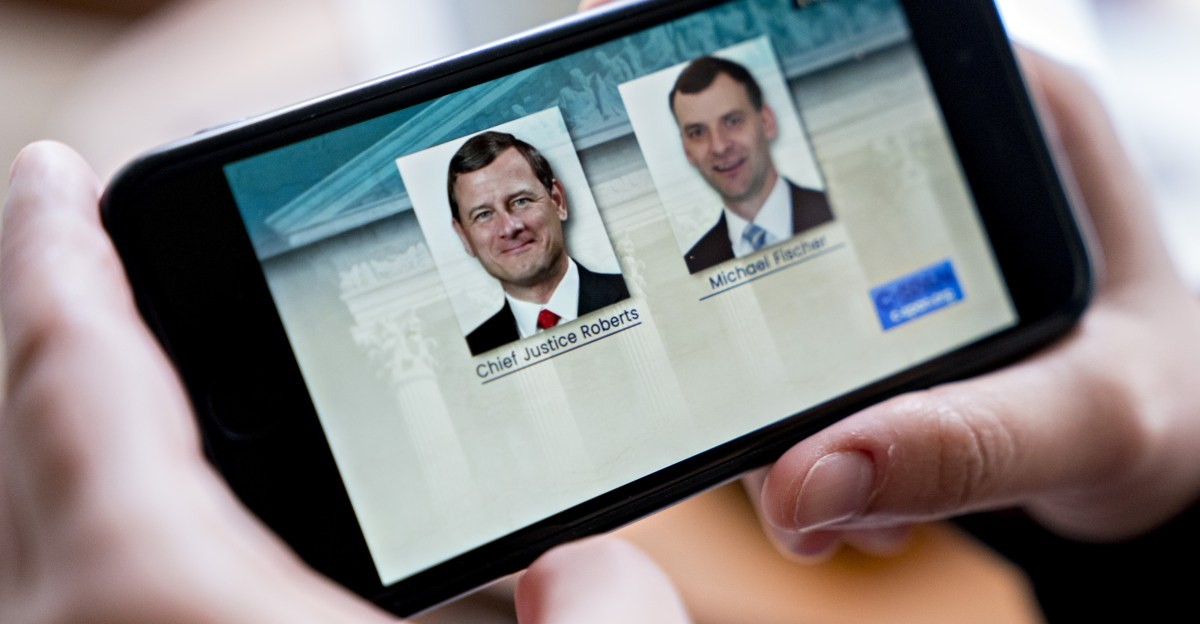
The U.S. Supreme Court is currently navigating a high-stakes debate over how much power the government should have to track citizens through their digital footprints. At the heart of the matter is Chatrie v. United States, a case that tests the boundaries of privacy in an era where our smartphones constantly record our movements.
The Core Conflict: What is a “Geofence” Warrant?
The case centers on a controversial investigative tool known as a “geofence” warrant. Unlike traditional surveillance that targets a specific individual, a geofence warrant asks tech companies—such as Google—to identify everyone who was present within a specific geographic area during a specific window of time.
In the Chatrie case, police used this method to investigate a bank robbery in Midlothian, Virginia. They obtained a warrant for a 150-meter radius around the crime scene, which inadvertently included a nearby church. Through a tiered process, Google provided anonymized data for 19 people in the area; the police eventually narrowed this down to three specific individuals, one of whom was the defendant, Chatrie.
The Judicial Divide: Three Emerging Perspectives
During oral arguments, the Justices appeared to split into three distinct camps regarding how much protection the Fourth Amendment should afford digital users:
1. The Pro-Law Enforcement View
Justices Clarence Thomas and Samuel Alito signaled a desire to limit the scope of existing privacy protections. Justice Alito argued that current precedents, such as the 2018 Carpenter decision, should only apply to data that users “have no choice but to disclose” (like cell tower connections). Under this logic, if a user can “opt out” of location tracking in an app like Google Maps, the government might not need a warrant to access that data.
The Risk: If this view prevails, the government could potentially track nearly anyone’s movements by simply relying on apps where location sharing is optional.
2. The Privacy Protections View
Other Justices expressed deep concern over the “dragnet” nature of these warrants. Chief Justice John Roberts pointed out the chilling potential for government overreach, noting that such warrants could allow police to identify every person attending a religious service or a political rally. Justice Neil Gorsuch and Justice Amy Coney Barrett also raised alarms, suggesting that if the government’s logic is accepted, police might gain warrantless access to sensitive personal data like emails, photos, and even the specific movements of people inside private bedrooms.
3. The Middle Ground
Some Justices suggested a “reasonable limits” approach. Justice Brett Kavanaugh indicated that geofence warrants might be constitutional as long as they are strictly limited in both time and geography. Similarly, Justice Ketanji Brown Jackson suggested that while identifying a small group of people near a crime scene might be acceptable with a warrant, additional judicial oversight should be required before police can “unmask” specific individuals from that group.
Why This Matters for the Future of Privacy
The legal tension in Chatrie arises from a fundamental question: Does “voluntary” digital usage waive your right to privacy?
If the Court rules that using an app constitutes “consent” to be tracked, the digital privacy protections established in recent years could be significantly eroded. However, the Court seems wary of creating a “wild west” of surveillance where the government can monitor entire crowds of protesters or worshippers without specific suspicion.
Conclusion
The Supreme Court is expected to issue a nuanced, cautious ruling that maintains the requirement for warrants but leaves much of the practical implementation to lower courts. While the decision may not overturn existing law, it will likely signal how much “digital dragnet” surveillance the Constitution will tolerate in an increasingly connected world.