





Smartphones and GPS receivers aren’t just tools anymore. They are cultural phenomena. Apple’s iPhone didn’t just sell hardware. It carved out an entirely new industry for mobile applications. This shift inspired dozens of developers to build innovative games and apps for handheld devices. Dennis Crowley and Naveen Selvadurai are two of those creators.
Crowley had already dipped his toes in the water. He developed a mobile service called Dodgeball. The concept was straightforward. You texted your location to the service. It then broadcasted that data to other Dodgeball members nearby. The goal was simple social engineering. Meet old friends. Make new ones.
Google bought Dodgeball in 2005. They eventually shut it down.
Crowley didn’t walk away. He teamed up with Selvadurai to build something else. They created Foursquare. It shares DNA with Dodgeball. But it is distinct. It plays differently.
Foursquare isn’t just a digital billboard for your whereabouts. It is a game. It pairs virtual rewards with real-world movement. Visit a spot enough times. You earn a badge. Visit it often enough. You become the “mayor” of that location.
“Foursquare serves as a game, pairing virtual rewards with real activities.”
The app lets you find out who is in your area. It helps you meet new people. It encourages you to compete against others in your city. The mechanics are simple. The addiction is not.
The Basics of Foursquare
The core loop relies on check-ins. You announce your presence. The app tracks your frequency. The hierarchy is built on that data. Being the most frequent visitor grants you status. It grants you the title of mayor.
This gamification of location data changed how people interact with cities. It wasn’t just about navigation. It was about dominance. And bragging rights.

Before you bother installing the app, check one thing: does your city have coverage? When Foursquare first launched, it only worked in twelve cities. The team keeps adding more, but if your town isn’t on that list, the service is useless to you.
Assuming you are in a supported area, the signup process is straightforward. Go to the Foursquare website and fill out the online form. It’s free. You can upload a photo to serve as your avatar, or skip it. Once the account is active, you’re in.
Choosing Your Platform
How you interact with the service depends on your hardware. If you are rocking an iPhone or an Android device, download the dedicated app. It handles the heavy lifting. The founders are working on ports for Palm’s WebOS and BlackBerry OS, but those aren’t ready yet.
If your smartphone can surf the web but lacks native support, hit the site through your browser. Even if you are stuck on a basic feature phone, you aren’t locked out. Just text the SMS code 50500.
Checking In and Earning Status
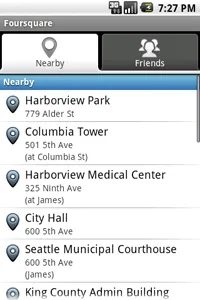
Let’s say you have the Android app ready. You head out to a bar, a restaurant, or a club. Open the app. It taps into your phone’s GPS receiver to pinpoint your location. A list of nearby places pops up. Pick the one you are at. The status updates.
Check in enough times at the same spot and you become the mayor. Visit enough different locations—or enough of the same type—to earn badges. Friends who also use the platform can see your updates in real time. This visibility might lead to spontaneous meetups as you converge on a particular destination later in the night.
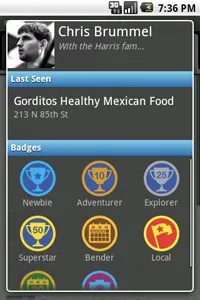
The moment you tap that first check-in button, you get a shiny Newbie badge. It’s the welcome mat. But the real game begins with the Local badge. Visit the same spot repeatedly within a month and you unlock it. The founders are still rolling out new badges. They want user suggestions to shape the next wave of achievements.
Badges aren’t just about time spent. They’re about traits. Tag locations and the system reacts. Visit spots popular with a specific crowd and you might earn an Animal House badge. This relies entirely on community tagging. Accuracy matters. If a venue changes its vibe, your badge eligibility might shift. The system is fluid.
Tips Over Reviews
You can do more than just check in. You can drop tips. Think you found the best mushroom bacon burger in town? Log it. Share it. This turns Foursquare into a hybrid of social network and review engine.
It’s not all sunshine. Users post honest takes. If a club is playing outdated tracks, you can call it out. The content is user-generated. That means it’s raw. It’s unpredictable. It’s useful, but it’s not always polite.
The Mayor Game and The Cheating Risk
Partnerships are the next step. Restaurants and clubs want to offer perks. A free appetizer for the Mayor of that location? That’s the goal. But there’s a flaw in the logic.
Gaming the system is too easy.
The app uses GPS on iPhone and Android. But you don’t have to be there. You can check in remotely from your couch. If real rewards enter the equation, people will cheat. They’ll exploit the trust in the badge system. It’s a simple human nature problem.
Why Manual Check-ins?
You might wonder why you can’t just let the phone handle it. Why manually tap a button?
Two reasons.
First, background processes are restricted. iPhones, for instance, don’t let apps run wild in the background. Second, GPS drains batteries. Fast.
Keeping the radio on all day kills your charge. The founders chose manual check-ins to save your battery life. It’s an annoyance you accept to keep your phone alive. It’s a trade-off. Convenience for longevity.
Behind the Scenes at Foursquare
The architecture supports this manual interaction. It keeps the servers light. It keeps the phones cool. But it also keeps the data sparse until you actively participate.
The Lean Engine Behind Location Check-Ins
You might look at a platform with global reach and assume a massive backend team. But Foursquare started with just three people.
Three.
How do you build a location-based social network with that kind of lean staffing? You don’t code every client yourself. You open the door.
The founders created an application programming interface (API). They didn’t just keep it internal. They let developers build on top of it. Developers rushed to create apps for the iPhone and the Android operating system. The Foursquare team didn’t have to manage those separate codebases. They could focus on the core service instead.
It’s a classic platform play. Give others the tools, and they build the front end.
Data as the Bottleneck
Building the app was only half the battle. The real grind was the data.
To support a city, you need geotagged information. You need to know where things are. You need to organize that chaos on the server. Foursquare didn’t do this alone. They reached out to other companies. They fleshed out regional databases through partnerships.
It wasn’t fast.
When they launched, they supported only 12 cities. It took months to expand to more than 20. The growth was incremental. It required manual effort to verify and ingest location data for each new market.
Launching at SXSW
The marketing strategy was equally specific. They didn’t buy billboards. They chose South by Southwest (SXSW) in Austin, Texas.
SXSW is a multimedia event. It covers movies, music, and interactive software. It attracts the exact demographic that cares about early tech adoption. Unleashing the service there was a calculated move.
Bloggers showed up. Journalists showed up. They used the service to check in at various spots. They tracked what others were doing. The coverage was organic. It provided an initial viral marketing boost that paid for itself in attention.
The Investor Angle
Capital matters. Even with a small team, you need runway.
Jack Dorsey, co-founder of Twitter, invested. Kevin Rose, founder of Digg, came on board too. These aren’t just checks. They’re validations.
As more people adopt the service, the value increases. The network effect kicks in. If the founders can build a viable business model, these investments look like savvy moves. The potential for revenue is tied directly to user engagement.
The Growth Flywheel
In the meantime, Foursquare evangelists worked to lure new members. The strategy was simple.
More people means richer data. Richer data means a more robust service. And since anyone with a phone can play for free, the member roster has every reason to keep growing.
There’s no barrier to entry. Just a smartphone and a desire to see what’s happening nearby.
The question isn’t really about the technology anymore. It’s about whether the network can sustain its momentum. Or if the novelty wears off before the business model holds.
We’ll see how the city counts climb next. And whether three people can keep up with the world.