


Two hours. That’s how long the I/O 2026 main stage ran. It was dense, heavy on promises, and relentlessly focused on one thing. AI. Not as an accessory but as the entire engine.
The announcements weren’t scattered. They converged on Gemini. And the new models suggest Google is betting the house on speed, realism, and agents that actually do stuff.
Gemini 3.5
Speed is the headline here.
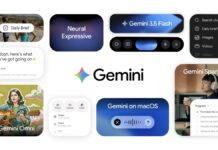
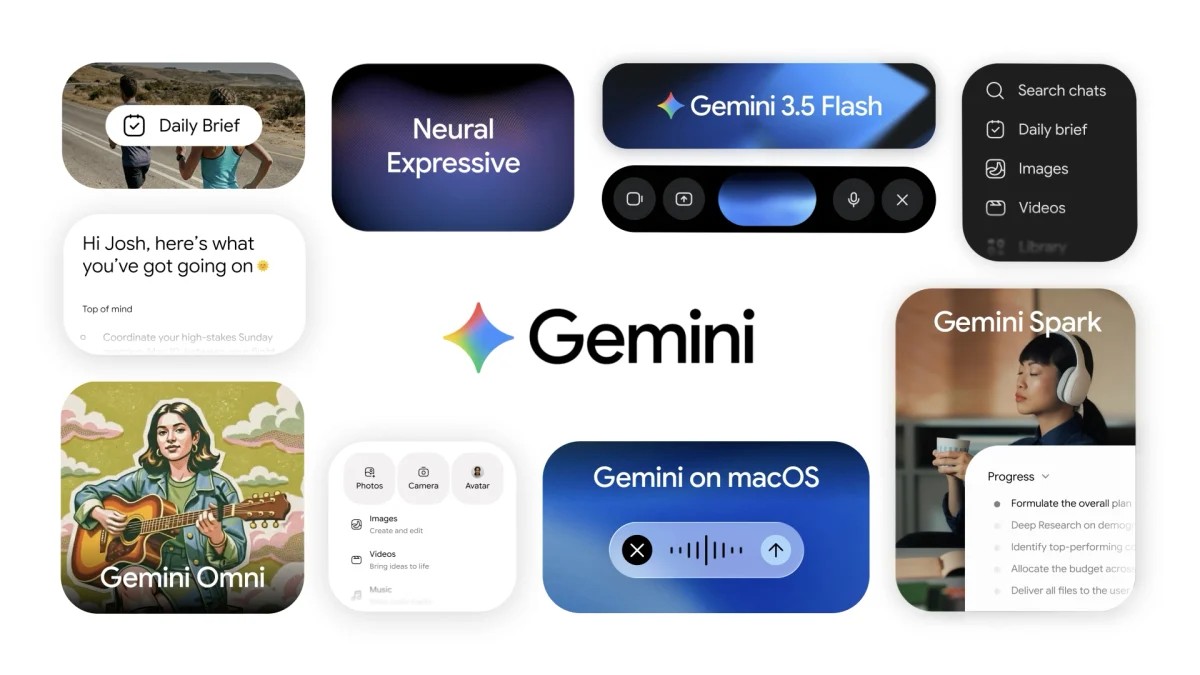
Google CEO Sundar Pichai introduced Gemini 3.5, a new family of models kicking off with the Flash variant. Pro arrives next month. The numbers are loud. Four times faster output than other frontier models. Tokens per second are up significantly.
But it’s not just about going fast. Google claims it beats most competitors on standard benchmarks, including the previous flagship, Gemini 3.1 Pro.
Speed matters, but only if you get the answer right.
Right now, Gemini 3.5 Flash is the default engine under the hood. It powers the main app and the AI Mode in Google Search. You’re likely using it already, even if you don’t know the name.
Omni: Seeing the World Differently
Text isn’t enough anymore. Neither is simple text-to-video generation. Enter Gemini Omni.
This isn’t a model that just makes pretty videos. It’s a world model from Google DeepMind. DeepMind CEO Demis Hassabi didn’t mince words at the end of the keynotel. He called it a “pivotal step” toward Artificial General Intelligence. That is a bold claim for a tech conference.
The difference is modal depth. You feed Omni text, audio, images, or video. It consumes it all. Then, using what Google calls “real-world knowledge,” it generates output that is scientifically accurate.
Realism, not just render quality.
Gemini Omni Flash is out now for subscribers to the Plus, Pro, and Ultra tiers. You can access it in the app or via Google Flow. Free users aren’t left out for long either. It lands in YouTube Shorts and the Create app later this week. No cost.
The Agent Era Arrives
Forget chatbots that answer questions. Meet Gemini Spark.
Google is positioning Spark as a personal AI agent. It is arguably the most aggressive shift in product philosophy at this year’s I/O.
It connects.
It talks to Gmail, Docs, Calendar, and soon more than 30 third-party apps via MCP. We are looking at Adobe, Dropbox, Uber. The agent can pull your inbox, read a doc, synthesize the data, and draft an update for your manager. All automatically.
Do you want software that works, or software you work with?
It runs in the cloud. No heavy local hardware needed. For now, Ultra subscribers in the US get first access. Gmail and Chat integrations start next week.
Money and Design
Good news if you liked the tech but hated the price tag.
The Google AI Ultra tier just dropped its price. It starts at $99 a month now. The higher bracket is $200. Compare that to the previous $250 starting price for access to things like the AI Inbox. That’s a significant cut for features that were previously locked behind a premium wall.
And the look of the thing changes too.
It’s called Neural Expressive. Less sterile UI, more fluid. Better animations, haptics that feel intentional, and vibrant colors. The big shift? The Gemini Live voice experience is now native to the interface. No switching apps. No context loss.
It rolls out globally on desktop, Android, iOS.
The platform feels different. Heavier on integration, lighter on friction. The question is whether our daily habits can catch up to what the models are capable of doing.
Maybe the tech is ready. We’re the bottleneck now. 📱