




Lamar Smith didn’t just kill the Stop Online Piracy Act. He buried it. On January 20, 2012, the U.S. Representative from Texas pulled H.R. 3261 from the House floor. The legislation had been a lightning rod. Industry giants like the Motion Pictures Association of America and the Recording Industry Association of America screamed for its passage. Critics screamed louder. Smith argued that foreign piracy was still a problem that needed solving. He just admitted the current approach was too blunt. So, the bill went dormant. But it wasn’t gone. And the debate it sparked about how the government might control the internet remains relevant today.
Let’s cut through the noise. Stealing is bad. Taking an apple from a store leaves the shelf empty. You can’t sell that apple again. Digital theft doesn’t work that way. Copying a movie file doesn’t destroy the original. The studio still owns the master. The studio still sells tickets. Yet, the perception of loss is real. The industry argues that billions vanish into the ether every year. Whether that number is accurate is another story entirely.
The Jurisdiction Gap
The internet has no borders. A server in Russia can host files accessible in Ohio. A developer in India can run a site from a laptop in London. U.S. law stops at the waterline. It struggles to reach across oceans to prosecute foreign entities. This jurisdictional gap is the core reason for SOPA. The bill wasn’t designed to arrest a pirate in Mumbai. It was designed to choke the pipeline feeding American users.
Representative Smith introduced the bill in October 2011. The stated goal was to promote creativity and innovation by stopping the theft of U.S. property. But the mechanism was indirect. It targeted the infrastructure that connects American users to foreign infringing sites.
How the SOPA Approach Would Have Changed Your Browsing Experience
The bulk of the legislation focused on cutting off access. It didn’t just block content. It targeted the services that make the web function for U.S. residents. If the Attorney General issued a court order, domestic companies would have five days to comply.
Internet Service Providers would have been forced to block domain names. This isn’t just a simple filter. ISPs would have to ensure their domain name systems didn’t resolve the infringing site’s name to its IP address. Try to type the URL. You’d get an error. Or a redirect. The connection would fail before it reached the server.
Search engines would have faced similar pressure. Google and Bing would have been required to remove all direct links to the targeted sites. They’d have to scour their indexes for five days after receiving the order. The goal was to make the sites invisible to the average searcher.
Financial flows would have been the next target. Payment processors like PayPal would have had to stop accepting funds from U.S. users for those sites. Ad networks would have been banned from serving ads on the pages. No ads mean no revenue. No revenue means the pirate site can’t pay for hosting. The theory was simple: star the beast.
The Scope of the Target
SOPA didn’t just look at movie sites. It targeted any site deemed “United States directed.” This meant sites that clearly aimed their content at an American audience. The definition of “foreign infringer” was broad. It included sites distributing counterfeit goods. It included pharmaceutical sites. It included sites streaming copyrighted material on demand.
The criteria were specific. The site had to exist primarily to distribute pirated or counterfeit goods. Profit didn’t have to be the sole motive. Distribution was enough.
Critics argued this was a overreach. They pointed out that the Government Accountability Office found it difficult to estimate the actual revenue lost to piracy. If the loss is hard to measure, is the cure justified? The bill didn’t require proof of actual damage for every action. It relied on the Attorney General’s order.
The Human Cost of Enforcement
Imagine you own a legitimate website. A foreign entity copies your content. Under SOPA, you could petition the government. If the Attorney General agreed, the site could be blocked. The financial networks would be cut off. But what if you’re the one accused? What if the order is wrong?
The bill placed the burden on domestic companies. ISPs, search engines, payment providers. They had to act quickly. Five days. That’s not much time to vet a complex legal claim. They risked liability if they didn’t comply. They risked angering users if they blocked legitimate sites by mistake.
The tech community panicked. They saw this as a threat to the open architecture of the web. Domain names are global. Blocking them in one country creates friction everywhere. It sets a precedent. If the U.S. can block a site for piracy, what else can it block? Political dissent? Unwanted news?
Smith said the government still needs to address foreign piracy. He admitted the first draft was flawed. But the fundamental tension remains. How do you protect intellectual property in a borderless world without breaking the tools that make the internet work?
The bill is shelved. For now. But the technology hasn’t changed. The pirates haven’t stopped. The industries are still losing money, or at least they believe they are. And the question of how to stop them without turning the web into a walled garden remains unanswered.
The act requires ISPs to block access to the domain name for the infringing site. That means if you were in the United States and tried to visit a blocked site you’d either receive an error message or you’d be redirected to another page.
This is the core of the controversy. It’s not about stopping the pirate directly. It’s about making it impossible for you to reach them. It’s about leveraging the power of domestic intermediaries to enforce foreign policy. It’s about speed. Five days to cut off a site. No lengthy trial. No appeal process built into the immediate action. Just an order and a shutdown.
The Motion Pictures Association of America defended the bill. They argued that piracy costs them billions. They argued that the current laws are ineffective against foreign hosts. They pointed to the ease of copying and distributing digital content. One click. A upload. And it’s gone.
The critics countered with the risk of censorship. They pointed to the potential for abuse. They argued that the definition of “infringing” could be stretched. They worried about the chilling effect on innovation. Startups might be afraid to build new services if they risk being blocked by mistake.
The debate wasn’t just legal. It was cultural. It was about what kind of internet we want. One where content is tightly controlled by rights holders? Or one where access is open, even if it means some content is freely available?
Smith withdrew the bill. But he didn’t withdraw the problem. The foreign sites are still there. They still host pirated content. They still target American users. The infrastructure he tried to choke is still functional. The question is what comes next. Another bill? A different approach? Or just more frustration?
The internet is a messy place. It doesn’t respect borders. It doesn’t respect laws. It just flows. And every attempt to dam that flow creates a new kind of pressure. SOPA was one such attempt. It failed. But the pressure remains. And it will build again.
The legal framework of SOPA didn’t just offer one path for enforcement. It created a dual-track system. One path required the attorney general to get a court order. The other relied on market pressure, bypassing the DOJ entirely.
The government route is aggressive. The attorney general seeks an order against ISPs, search engines, payment networks, and ad services. Once served, these companies have five days to comply. That’s a tight window.
But what if you can’t go through the DOJ? What if your rights are being violated by a site hosted in eastern Europe? The DMCA doesn’t reach there. So you take the market-based approach.
The Attorney General’s Court Order Path
Let’s say you run a major movie studio. Your latest blockbuster is leaking online before the theatrical release. The host is foreign. The DMCA is useless. You turn to SOPA’s provision involving the attorney general.
You draft a letter. You send it to a payment network provider or an internet advertising service. This isn’t a casual email. It’s a legal instrument. It must include specific evidence:
- Identification of the infringing site or subdomain.
- Proof that the site’s primary purpose is illegal distribution.
- Evidence the site targets the United States.
- Proof the site is actively distributing your IP without permission.
- Documentation that this distribution causes “immediate and irreparable injury.”
- Proof the payment or ad service is doing business with the infringer.
- A statement of accuracy for all provided information.
- Contact details for the rights holder.
- Your physical or electronic signature.
Once received, the provider has five days to cut off support. No hearing. No debate. Just compliance.
Who Backs the Legislation
Support for SOPA wasn’t distributed evenly. The Motion Picture Association of America (MPAA) and the Recording Industry Association of America (RIAA) are vocal advocates. They represent lucrative industries with a vested interest in crushing piracy.
The United States Chamber of Commerce also supports it. Despite its name, it’s not a government agency. It’s a lobbying group for businesses. It has deep pockets and political influence.
The pharmaceutical industry is onboard too. The act targets sites offering counterfeit drugs or “inherently dangerous goods or services.” Interestingly, the act doesn’t define who decides if a good is inherently dangerous. That ambiguity raised eyebrows.
Go Daddy, a web hosting provider, made headlines in late 2011. A post from the company sparked a “boycott Go Daddy” trend on Twitter. They later withdrew public support, though rumors persisted that they remained privately pro-SOPA.
The Tech Industry’s Resistance
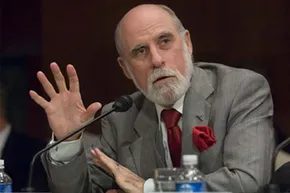
On the other side, Google, Facebook, eBay, and PayPal object. Many of these companies could be directly targeted under SOPA. Tech experts argue the legislation causes more harm than good. It won’t stop piracy. Vinton Cerf, one of the “fathers of the Internet,” even wrote to Lamar Smith expressing concerns.
Money plays a role here too. MapLight, which tracks money in politics, reported that SOPA sponsors received nearly $2 million from the entertainment industry. That’s four times what tech companies contributed.
The Due Process Problem
Critics point to a slippery slope. SOPA lacks due process. There’s no court hearing for the accused site. Most actions target sites that link to or support the infringer. But ISPs, search engines, and ad networks don’t own the content. They just facilitate access.
Imagine running a search engine like Google. You receive thousands of court orders to remove links. How do you verify each link violates IP rights? You don’t own the content. You’d have to audit third-party services. It’s time-consuming. Risky.
So you might just comply. To avoid trouble. This leads to censorship. The burden shifts to the intermediary. They become the enforcers. Without a hearing. Without a defense. The scale tips heavily against due process.
Does that level of power make sense for a private entity?
WikiLeaks represents a specific vulnerability in the SOPA framework. The site hosts sensitive government and corporate documents, making it a prime target for corporate lobbying. However, its servers operate outside U.S. jurisdiction, placing them beyond the direct reach of American courts. SOPA would not seize the site. Instead, it would pressure companies to cut off access and support indirectly. This creates a chilling effect. It forces service providers to choose between compliance and serving users who value free information.
Then there is the technical reality of security. Agencies have spent years developing Domain Name System Security Extensions (DNSSEC). The goal is simple: make internet traffic authentic and intact. DNSSEC provides origin authentication and data integrity. It prevents hackers from spoofing DNS responses. But SOPA’s requirement for ISPs to block domains breaks this system. You cannot secure a domain and block it at the same time. The two functions are mutually exclusive. Implementing SOPA means disabling DNSSEC. That undermines the entire security infrastructure built over decades.
Can SOPA Actually Stop Piracy?
The most damaging criticism of the bill is that it fails to stop pirates. The legislation targets the gatekeepers, not the flow of data. When House Representatives debated the bill in December, a counter-measure appeared online. Firefox users could install DeSOPA. This extension bypasses blocked domains by querying foreign DNS servers. Since those servers are not under U.S. control, they keep the domains active. The blockade becomes porous.
Even without browser extensions, the internet has fallbacks. Every website has an IP address. These are numeric labels like 192.0.2.1. You do not use them because humans are bad at remembering numbers. That is why the Domain Name System exists. It resolves friendly names to those numbers. But if SOPA blocks the names, the numbers remain accessible. Users who know the IP address can still reach the site. Expect a surge in websites dedicated to listing these IP addresses. It turns a technical convenience into a cat-and-mouse game.
The Political Reversal
Public outcry changed the trajectory of the bill. Debate stretched from December into January 2012. Members of Congress faced intense pressure. They proposed changes and amendments. The public did not want censorship. They did not want to break internet security.
On January 13, 2012, Rep. Lamar Smith removed the key provision. He dropped the requirement for ISPs to block domain names. This was a significant concession. The Obama administration responded the next day. The statement was clear. President Obama would not support legislation that censors innocent parties. He also refused to back any law that undermines internet security. The combination of technical impossibility and political pressure killed the bill’s momentum.
SOPA was effectively stopped on January 18, 2012. The bill was withdrawn. At least temporarily. The question remains whether the United States will pass a similar law in the future. The legal system and internet infrastructure are complex. They do not yield to simple fixes. The debate about censorship and security is not over. It just paused.