



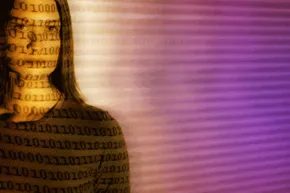
The question of what is real feels less like a philosophical debate and more like a daily glitch. We perceive only a fraction of our surroundings. The internet feels ubiquitous yet intangible. Are we real? Or are we just code?
Nick Bostrom, an Oxford philosopher, popularized the simulation argument in 2003. His premise is simple but terrifying. If civilizations can simulate universes, they will. If they create many simulations, we are likely living in one of those copies. Our reality might just be ones and zeroes.
The Lattice of Reality
Physics offers a way to test this. Three researchers—Silas R. Beane, Zohreh Davoudi, and Martin J. Savage—asked a different question. How would we detect if our universe is an advanced video game?
Their work relies on lattice gauge theory and quantum chromodynamics (QCD). These fields study the strong nuclear force. This force binds subatomic particles together. It is the strongest of the four fundamental forces. Yet it operates at the shortest range.
QCD explains this force in four space-time dimensions. Scientists use high-performance computing to simulate small universes. They do this to study QCD. The scale is femto. A nanometer is one-billionth of a meter. A femtometer is one-quadrillionth of a meter. That is 10^-15 meters.
In these simulations, space-time is a lattice. It is a grid. If we could shrink down and look inside our own universe, we might see this grid. We might see how energies interact with it.
Cosmic Rays and the Grid
The evidence could be in cosmic rays. If our universe is a simulation using lattice techniques, cosmic rays should behave differently. They would show a lattice structure. They would hit energy limits based on the grid.
Detecting this requires massive technology. We need to measure cosmic ray behavior precisely. The theory assumes a few things. The simulators used methods similar to QCD experiments. They had limited resources. Our universe is finite. They are not hiding the truth from us.
If cosmic rays exhibit these constraints, we have proof. We are in a construct.
Hadrons and Colliders
Particles that feel the strong force are hadrons. Protons are hadrons. Neutrons are hadrons. The Large Hadron Collider smashes these particles together. It accelerates protons near light speed. It creates collisions to study fundamental matter.
If the universe is a lattice, these collisions might reveal the grid. The energy levels would not be continuous. They would be discrete. Like pixels in a game.
The Uncomfortable Truth
Bostrom’s argument does not prove we are in a simulation. It suggests it is statistically probable. Unless we hit a technological ceiling. Or we go extinct before reaching that level of sophistication.
It is a dizzying thought. Universe nesting dolls. Simulations within simulations. The reality we know is limited.
The physicists’ work is not about proving the illusion. It is about finding the seams. Can we see the code? We need better detectors. We need to look at cosmic rays with new eyes.
If we find the lattice, the game changes. If we don’t, we are alone in the dark. The math is there. The question is whether we can look hard enough to see it.

The Science Problem With Simulation Theory
Let’s be clear right away: the simulation argument isn’t proof. It’s a hypothesis built on shaky ground. If you remove just one of its core assumptions, the whole thing collapses. That’s a fatal flaw for anything claiming to describe reality.
The bigger issue is that the idea is falsifiable only in name. A falsifiable theory must be capable of being disproven by experiment or observation. Science runs on this mechanic. Without it, you’re not doing science. You’re doing fiction.
Think of it this way. If I told you there’s an invisible, intangible mouse following you everywhere, you can’t disprove it. The mouse makes no sound. It passes through walls. It’s gone if you look directly at it. That claim is unfalsifiable. It sits outside the realm of science because there is no test that could ever prove me wrong.
The simulation hypothesis suffers from the exact same bug. Even if physicists run the tests they suggest and find nothing, a skeptic can always argue the simulation is masking the truth. It’s a closed loop. You can’t get out. That’s why this remains a philosophical exercise, not a scientific discovery.
What If It’s True?
But let’s play along. Let’s say we somehow prove beyond a shadow of a doubt that we’re living in a computer code. What happens next?
The religious implications would be massive. We’d have proof of a creator. This being might not look like the figures in our holy books. It might be a teenager in a higher dimension. It might be an AI. The details don’t matter as much as the fact that we aren’t alone in our existence.
Society would fracture. Skepticism would run rampant. Many people would deny it. Others would panic. The social fabric would stretch under the weight of existential dread.
Daily Life Stays the Same
Here’s the kicker. For the average person, nothing changes.
You still eat. You still breathe. You still pay bills and worry about your back pain. The rules of physics don’t care whether they are rendered by a GPU or generated by fundamental constants. If you’re in a simulation, you’re still stuck in it. Your pain feels real. Your joy feels real. The context shifts, but the experience doesn’t.
The Matrix Scenario
There is one exception. What if we could talk to the admins?
If we found a way to interact with the creators, the game changes. We might end up in a Matrix -style scenario where editing code lets us alter our reality. We could rewrite our biology. We could delete our taxes.
Or, it could be far more boring and terrifying. The creators might just get bored. They might hit shutdown.
Right now, we have zero evidence either way. It’s a fun thought experiment. A puzzle for philosophers. But until we see the source code, we’re just guessing.
Is it comforting? Is it terrifying?
Probably both. And that’s enough for today.