




The gerontocracy in Washington isn’t just a theory. It’s a fact on the ground. The median senator is 64. Twenty members of Congress are over the age of 80. One scholar recently labeled this state of affairs the “old-igarchy.”
Recent events have forced a spotlight onto this demographic reality. President Donald Trump’s 80th birthday. The sudden death of Sen. Lindsey Graham. The lingering uncertainty surrounding Sen. Mitch McConnell’s health. These moments collectively highlight the advanced age of our elected leadership. It raises an obvious question. Why don’t they leave?
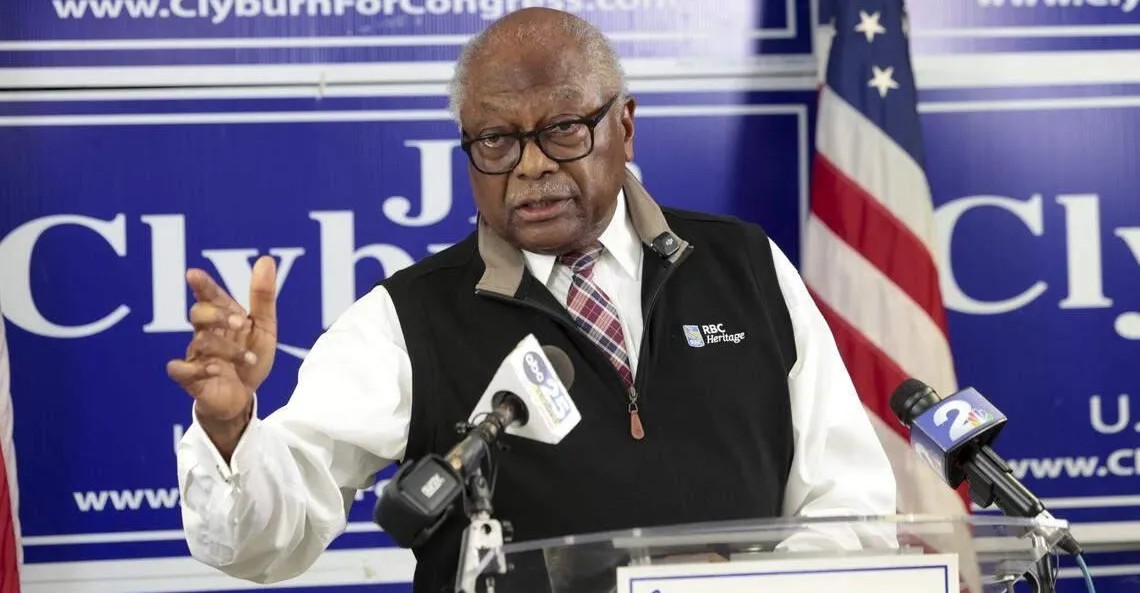
On Rep. Jim Clyburn’s 86th birthday this week, I sat down with the House Democratic Leader from South Carolina. The goal was delicate. I wanted to ask why these “oldheads” refuse to step down. This curiosity stemmed directly from the public backlash regarding then-President Joe Biden’s age.
Clyburn’s answer was blunt. He has more energy than many 66-year-olds. He possesses experience they lack.
“I know people who are 66 with much less energy than I have and none of the experience.”
He dismissed calls for term limits or age caps. However, he showed openness to a new proposal requiring members of Congress to undergo cognitive testing. But that is just one layer of his mindset. Here is what else came out in our conversation about generational turnover, corporate PAC money, and the political lessons of 2024.
Why establishment Democrats won’t retire
It isn’t that young lawmakers haven’t asked older colleagues to move on. It’s that they simply don’t want to. For Clyburn, this stubbornness serves double duty. It is armor. It is also a blind spot.
When asked if younger generations distrust older politicians’ ability to deliver results, he invoked his grandparents. “Don’t worry about what people call you,” he said. “It’s what you answer to that is the issue.”
Wisdom? Perhaps. Or just decades of hardening.
Ignoring criticism can look a lot like ignoring electoral feedback. “I don’t react to that stuff,” Clyburn said regarding demands for generational change.
This attitude preserves the status quo. It ignores the clear signal that voters are sending.
The argument that voters are to blame
Clyburn articulates the establishment view with clean precision: There is nothing to fix. He does not believe the Democratic Party made significant errors in 2025. He views primary losses in New York City and Colorado as isolated flashes. Not trends.
Pushed on the lesson from an administration designed to stop Trump that resulted in Trump’s return to office, he pointed to turnout data.
“When the white vote turned out 71% two years ago and the Black vote turned out 51%,” he argued, “you tell me whose fault that is?”
When asked directly if he believed Black voters let Kamala Harris down, there was no hesitation. “In many instances. Absolutely.”
This philosophy blames the electorate. It insulates the party hierarchy from self-reflection. It shifts the burden of loss onto the people who failed to show up in sufficient numbers.
But this stance is being tested. The next round of primaries will determine if the establishment’s view holds water.
New York and Maine felt like local anomalies. Flukes. But Michigan and Wisconsin are coming. Those states are bellwethers. If losses continue there, the “freakout” temperature will rise. It is no longer a pattern of isolated events. It becomes a structural failure.
Defending the alliance with corporate PACs
The moderate wing of the Democratic Party relies on Black voters. Particularly in the South. Clyburn knows this dependency. He also defends the corporate alliances that support this coalition.
He argues that taking corporate donations is necessary for minority candidates who lack family wealth.
“I would challenge you to find me one vote I have ever cast that a pharmaceutical company supported that my constituents didn’t.”
On complex issues like Israel, he defers to Rep. Gregory Meeks. On local politics, he made no apology for supporting Andrew Cuomo over Zohran Mamdiani for New York City Mayor in 2025. This was the same Cuomo Clyburn previously said should resign.
Why the loyalty to the establishment?
I asked what Black communities get in return for their support. His answer was policy delivery. He cited the agendas passed during the Obama and Biden administrations. That is a valid metric of success.
But there is a deeper current.
Clyburn’s actions reflect a power struggle within the Democratic Party. The Black political class is investing heavily in protecting its position. They face rising coalitions. Immigrant communities are gaining influence.
His endorsements of Cuomo and Haley Stevens. His involvement in debates over primary voting order. These are not just political choices. They are defensive maneuvers. He is guarding territory against a shifting demographic tide.
The conversation about age in Washington is rarely just about biology. It’s about power. And it’s about who controls the narrative when the voters stop showing up.
“What did we get out of our support? An agenda.”
That’s his justification. But does an agenda bought with corporate PAC money satisfy a electorate demanding change? The next primary cycle will tell.